
The 7-Day Cyclades Itinerary: What Your Captain Won't Tell You Until You're Onboard
A realistic 7-day Cyclades crewed yacht itinerary covers 120-180 nautical miles, visits 5-7 islands, and requires routing decisions your captain makes in real time based on Meltemi conditions. Here's a route that balances ambition with reality-and the decisions that separate a good week from a great one.
The Cyclades are not the Ionian. That's the first thing anyone planning a Greek yacht charter needs to understand.
In the Ionian, you can wake up, check the weather, and decide on a whim to sail to Kefalonia instead of Ithaca. The distances are short, the winds are gentle, and the worst that happens is a longer lunch.
The Cyclades don't work like that.
These islands sit in the middle of the Aegean Sea, exposed to the Meltemia northerly wind that blows Force 5-7 from mid-June through August. When it's blowing, open-water passages become serious business. A 40-nautical-mile crossing that looks easy on paper can become a 4-hour pounding if you time it wrong.
This is why your itinerary matters. And why most of what you'll read online about Cyclades sailing is written by people who've never actually managed a charter here.
I have. Here's what I've learned.
Why Does a Cyclades Itinerary Require More Planning Than the Ionian?
The Cyclades demand respect because of three factors that don't exist in the Ionian: distance, wind, and exposure.
Distance: The islands are spread across a much larger area. Mykonos to Santorini is 70 nautical milesthat's a full day of passage on most yachts, not a leisurely morning cruise. Clients who want both islands in 7 days will spend two of those days almost entirely at sea.
Wind: The Meltemi is not occasional weather. From late June through August, it's the default condition. It typically builds from late morning, peaks in the afternoon (15-25 knots, sometimes higher), and moderates after sunset. Smart captains plan passages for early morning and anchor by early afternoon.
Exposure: Unlike the Ionian's protected channels, many Cycladic passages cross open water with significant fetch. A Force 6 wind in the Ionian creates choppy conditions. The same wind in the Cyclades creates 2-metre swells that make lunch uncomfortable and watersports impossible.
This is why motor yachts have an advantage in the Cyclades. A motor yacht can depart at 06:00, cover 40 miles by 10:00, and be anchored in a protected bay before the Meltemi builds. A sailing yacht covering the same distance will still be at sea when the wind picks up. Neither option is wrong-but they produce very different experiences.
For clients who value comfort and want to maximise time on the islands (rather than time under sail), a motor yacht in the Cyclades is worth the additional fuel cost.
What's the Best Starting Point for a Cyclades Charter?
Your embarkation point determines what's realistic in 7 days. Choose wrong, and you'll spend your week repositioning instead of exploring.
Athens (Marina Zeas or Alimos Marina)
The most flexible option. From Athens, you can reach Kea in ~3 hours, which opens the entire western Cyclades. If the Meltemi forecast looks severe, you can pivot to the Saronic Gulf instead-a decision you can make on Day 1 without losing your charter. Most MYBA charters begin here for precisely this reason.
Mykonos
Starting here puts you immediately in the heart of the Cyclades. The downside: if the Meltemi traps you, your options are limited. Mykonos to Athens against a northerly wind is a brutal passage-5-7 hours of pounding into head seas. I've seen clients return to Athens exhausted, having spent their final charter day holding on rather than relaxing.
Paros
The insider's choice. Paros sits in a more protected position than Mykonos, with easier access to both the northern islands (Syros, Tinos, Mykonos) and the southern gems (Antiparos, Milos, Sifnos). Naousa harbour is charming, and you avoid the Mykonos chaos. For clients who've done the Cyclades before, Paros offers a smarter entry point.
My recommendation for first-time Cyclades charterers: start in Athens. The flexibility is worth more than the extra passage time on Day 1.
Day-by-Day: A Realistic 7-Day Cyclades Route
This itinerary assumes a motor yacht or large catamaran departing from Athens. Sailing yachts should expect longer passage times and should build in more weather flexibility.
Day 1: Athens → Kea (Vourkari), 24 nautical miles
Depart Marina Zeas by 09:00. The passage to Kea is straightforward-southeast across the Saronic Gulf, then through the Kea Channel. By early afternoon, you're anchored in Vourkari, one of the most protected natural harbours in the Cyclades.
Why Kea: This island is the smart first stop because it eases you into the Cyclades without committing to the Meltemi zone. Vourkari has excellent tavernas (Strofi tou Mimi for seafood), and the anchorage is calm even when winds build. Your crew can provision here if needed, and clients can walk to the ancient Lion of Keaa 6th-century BC sculpture carved into the hillside.
Anchorage: Vourkari bay, stern-to or anchor in 5-8 metres, sand and weed. Well-protected from north winds.
Day 2: Kea → Syros (Ermoupoli), 26 nautical miles
Early departure recommended. The passage crosses open water, and by mid-morning, the Meltemi will be building. Aim to arrive in Ermoupoli by 12:00.
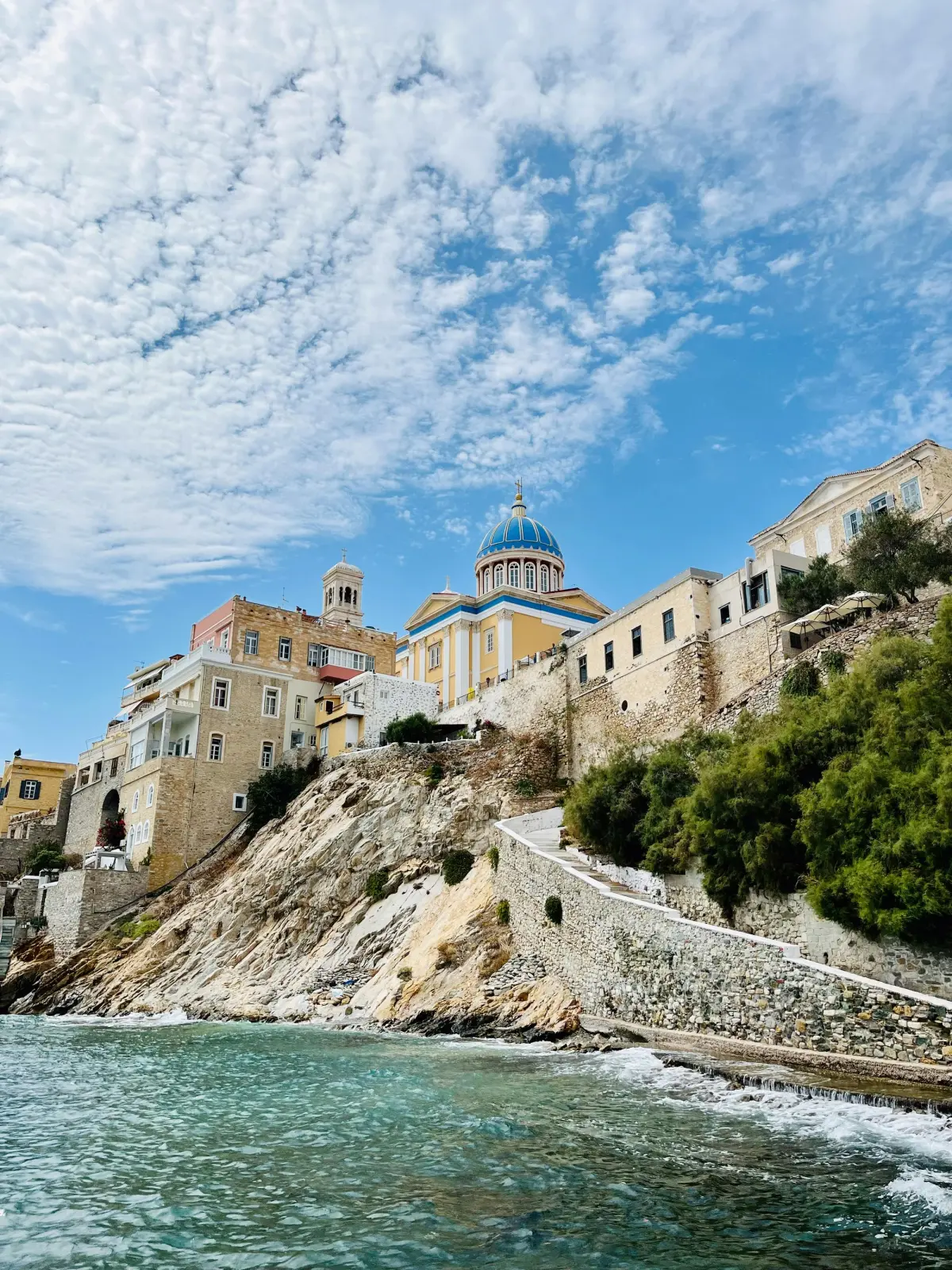
Why Syros: Ermoupoli is the administrative capital of the Cyclades, and it looks nothing like the other islands. Neoclassical mansions, a miniature La Scala opera house, and none of the tourist density of Mykonos. This is where Greeks go when they want Cycladic beauty without the performance.
George's recommendation: Dinner at Mazi, overlooking the harbour. Order the slow-cooked lamb and the local Syros loukoumi for dessert.
Anchorage: Ermoupoli harbour, stern-to on the main quay. Pay attention to the ferry traffic-the Athens ferries pass close.
Day 3: Syros → Mykonos (Ornos Bay), 22 nautical miles
The passage to Mykonos is manageable, but the destination requires strategy.
The Mykonos trap: Most first-time visitors want to berth in Mykonos Town and experience the famous nightlife. Here's the reality: the old port is chaotic, exposed to the Meltemi, and limited to vessels under 30 metres. Larger yachts must use Tourlos Marina (functional but charmless) or anchor in Ornos Bay.
My advice: anchor in Ornos Bay and tender into town. You get the Mykonos experience without the stress of fighting for quay space or rolling all night in an exposed berth.
What's worth doing: One dinner in Little Venice, one drink at a beach club (Scorpios or Alemagou if your clients want the scene), and then move on. Mykonos is best in small doses. Three nights here is diminishing returns.
Anchorage: Ornos Bay, anchor in 6-10 metres, sand. Some roll in afternoon winds but manageable.
Day 4: Mykonos → Delos → Paros (Naousa), 18 nautical miles
Morning visit to Delos, then afternoon passage to Paros.
Delos: The sacred island-birthplace of Apollo in Greek mythology. No overnight stays are permitted, but a morning visit is essential. Anchor off the ancient harbour (weather permitting) and tender ashore. Budget 2-3 hours for the archaeological site. This is one of the most significant ancient sites in the Mediterranean, and your clients will have it largely to themselves if you arrive by 08:00.
Paros: After Delos, continue south to Paros. Naousa is the jewel-a Venetian harbour town that has managed to retain its character despite tourism. The restaurants are genuinely good (Mario's for seafood, Sigi Ikthios for the locals' choice), and the town is walkable and beautiful after dark.
Anchorage: Naousa harbour approach or Santa Maria bay to the north. Naousa inner harbour is shallow and crowded-anchor outside and tender in.
Day 5: Paros → Antiparos → Milos (Adamas), 32 nautical miles
This is the longest passage of the week. Depart early-by 06:30 if possible.
Antiparos morning stop: Before committing to the Milos crossing, stop at Antiparos for a swim and breakfast. The famous cave (Antiparos Cave) is worth visiting if clients are interested, but the real appeal is the slow pace and lack of crowds. Anchor in the channel between Paros and Antiparos-protected and beautiful.
Milos: The passage from Antiparos to Milos is 28 nautical miles of open water. Time it for early morning, before the Meltemi builds. By early afternoon, you'll arrive at one of the most geologically dramatic islands in Greece.
Kleftiko: If conditions allow, approach Milos from the southwest and stop at Kleftikoa series of white volcanic rock formations and sea caves accessible only by boat. Anchor carefully (the bottom is rocky) and swim through the caves. This is a highlight of any Cyclades charter.
Evening: Continue to Adamas harbour for the night. Adamas is functional rather than charming, but Milos's beaches (Sarakiniko, Tsigrado) are worth a morning exploration on Day 6 if time permits.
Anchorage: Adamas harbour, stern-to or anchor in the bay. Well-protected.
Day 6: Milos → Sifnos (Vathi or Kamares), 18 nautical miles
This is why your itinerary matters. And why most of what you'll read online about Cyclades sailing is written by people who've never actually managed a charter here.
Why Does a Cyclades Itinerary Require More Planning Than the Ionian?
The Cyclades demand respect because of three factors that don't exist in the Ionian: distance, wind, and exposure.
Distance: The islands are spread across a much larger area. Mykonos to Santorini is 70 nautical milesthat's a full day of passage on most yachts, not a leisurely morning cruise. Clients who want both islands in 7 days will spend two of those days almost entirely at sea.
Wind: The Meltemi is not occasional weather. From late June through August, it's the default condition. It typically builds from late morning, peaks in the afternoon (15-25 knots, sometimes higher), and moderates after sunset. Smart captains plan passages for early morning and anchor by early afternoon.
Exposure: Unlike the Ionian's protected channels, many Cycladic passages cross open water with significant fetch. A Force 6 wind in the Ionian creates choppy conditions. The same wind in the Cyclades creates 2-metre swells that make lunch uncomfortable and watersports impossible.
This is why motor yachts have an advantage in the Cyclades. A motor yacht can depart at 06:00, cover 40 miles by 10:00, and be anchored in a protected bay before the Meltemi builds. A sailing yacht covering the same distance will still be at sea when the wind picks up. Neither option is wrong-but they produce very different experiences.
For clients who value comfort and want to maximise time on the islands (rather than time under sail), a motor yacht in the Cyclades is worth the additional fuel cost.
What's the Best Starting Point for a Cyclades Charter?
Your embarkation point determines what's realistic in 7 days. Choose wrong, and you'll spend your week repositioning instead of exploring.
Athens (Marina Zeas or Alimos Marina)
The most flexible option. From Athens, you can reach Kea in ~3 hours, which opens the entire western Cyclades. If the Meltemi forecast looks severe, you can pivot to the Saronic Gulf instead-a decision you can make on Day 1 without losing your charter. Most MYBA charters begin here for precisely this reason.
Mykonos
Starting here puts you immediately in the heart of the Cyclades. The downside: if the Meltemi traps you, your options are limited. Mykonos to Athens against a northerly wind is a brutal passage-5-7 hours of pounding into head seas. I've seen clients return to Athens exhausted, having spent their final charter day holding on rather than relaxing.
Paros
The insider's choice. Paros sits in a more protected position than Mykonos, with easier access to both the northern islands (Syros, Tinos, Mykonos) and the southern gems (Antiparos, Milos, Sifnos). Naousa harbour is charming, and you avoid the Mykonos chaos. For clients who've done the Cyclades before, Paros offers a smarter entry point.
My recommendation for first-time Cyclades charterers: start in Athens. The flexibility is worth more than the extra passage time on Day 1.
Day-by-Day: A Realistic 7-Day Cyclades Route
This itinerary assumes a motor yacht or large catamaran departing from Athens. Sailing yachts should expect longer passage times and should build in more weather flexibility.
Day 1: Athens → Kea (Vourkari), 24 nautical miles
Depart Marina Zeas by 09:00. The passage to Kea is straightforward-southeast across the Saronic Gulf, then through the Kea Channel. By early afternoon, you're anchored in Vourkari, one of the most protected natural harbours in the Cyclades.
Why Kea: This island is the smart first stop because it eases you into the Cyclades without committing to the Meltemi zone. Vourkari has excellent tavernas (Strofi tou Mimi for seafood), and the anchorage is calm even when winds build. Your crew can provision here if needed, and clients can walk to the ancient Lion of Keaa 6th-century BC sculpture carved into the hillside.
Anchorage: Vourkari bay, stern-to or anchor in 5-8 metres, sand and weed. Well-protected from north winds.
Day 2: Kea → Syros (Ermoupoli), 26 nautical miles
Early departure recommended. The passage crosses open water, and by mid-morning, the Meltemi will be building. Aim to arrive in Ermoupoli by 12:00.
Why Syros: Ermoupoli is the administrative capital of the Cyclades, and it looks nothing like the other islands. Neoclassical mansions, a miniature La Scala opera house, and none of the tourist density of Mykonos. This is where Greeks go when they want Cycladic beauty without the performance.
George's recommendation: Dinner at Mazi, overlooking the harbour. Order the slow-cooked lamb and the local Syros loukoumi for dessert.
Anchorage: Ermoupoli harbour, stern-to on the main quay. Pay attention to the ferry traffic-the Athens ferries pass close.
Day 3: Syros → Mykonos (Ornos Bay), 22 nautical miles
The passage to Mykonos is manageable, but the destination requires strategy.
The Mykonos trap: Most first-time visitors want to berth in Mykonos Town and experience the famous nightlife. Here's the reality: the old port is chaotic, exposed to the Meltemi, and limited to vessels under 30 metres. Larger yachts must use Tourlos Marina (functional but charmless) or anchor in Ornos Bay.
My advice: anchor in Ornos Bay and tender into town. You get the Mykonos experience without the stress of fighting for quay space or rolling all night in an exposed berth.
What's worth doing: One dinner in Little Venice, one drink at a beach club (Scorpios or Alemagou if your clients want the scene), and then move on. Mykonos is best in small doses. Three nights here is diminishing returns.
Anchorage: Ornos Bay, anchor in 6-10 metres, sand. Some roll in afternoon winds but manageable.
Day 4: Mykonos → Delos → Paros (Naousa), 18 nautical miles
Morning visit to Delos, then afternoon passage to Paros.
Delos: The sacred island-birthplace of Apollo in Greek mythology. No overnight stays are permitted, but a morning visit is essential. Anchor off the ancient harbour (weather permitting) and tender ashore. Budget 2-3 hours for the archaeological site. This is one of the most significant ancient sites in the Mediterranean, and your clients will have it largely to themselves if you arrive by 08:00.
Paros: After Delos, continue south to Paros. Naousa is the jewel-a Venetian harbour town that has managed to retain its character despite tourism. The restaurants are genuinely good (Mario's for seafood, Sigi Ikthios for the locals' choice), and the town is walkable and beautiful after dark.
Anchorage: Naousa harbour approach or Santa Maria bay to the north. Naousa inner harbour is shallow and crowded-anchor outside and tender in.
Day 5: Paros → Antiparos → Milos (Adamas), 32 nautical miles
This is the longest passage of the week. Depart early-by 06:30 if possible.
Antiparos morning stop: Before committing to the Milos crossing, stop at Antiparos for a swim and breakfast. The famous cave (Antiparos Cave) is worth visiting if clients are interested, but the real appeal is the slow pace and lack of crowds. Anchor in the channel between Paros and Antiparos-protected and beautiful.
Milos: The passage from Antiparos to Milos is 28 nautical miles of open water. Time it for early morning, before the Meltemi builds. By early afternoon, you'll arrive at one of the most geologically dramatic islands in Greece.
Kleftiko: If conditions allow, approach Milos from the southwest and stop at Kleftikoa series of white volcanic rock formations and sea caves accessible only by boat. Anchor carefully (the bottom is rocky) and swim through the caves. This is a highlight of any Cyclades charter.
Evening: Continue to Adamas harbour for the night. Adamas is functional rather than charming, but Milos's beaches (Sarakiniko, Tsigrado) are worth a morning exploration on Day 6 if time permits.
Anchorage: Adamas harbour, stern-to or anchor in the bay. Well-protected.
Day 6: Milos → Sifnos (Vathi or Kamares), 18 nautical miles
A shorter passage day, allowing time to explore Milos in the morning before departing.
Sifnos: This island is the culinary capital of the Cyclades. Sifnos produced Nikolaos Tselementes, the chef who wrote Greece's first modern cookbook, and the island's food culture remains exceptional. The local specialty is revithadachickpea stew cooked overnight in a wood-fired oven.
Vathi vs. Kamares:
- Vathi is a tiny, almost enclosed bay with a single taverna and complete tranquillity.
- Kamares is the main port, larger and more convenient but less atmospheric.
For clients seeking peace, choose Vathi. For clients wanting to explore the island's villages (Apollonia, Artemonas), Kamares offers better access.
GEORGE'S INSIDE INFO: Sifnos is where I send clients who've done Mykonos and Santorini and want something different. No nightclubs, no beach clubs, no scene. Just extraordinary food, beautiful hiking trails, and the kind of quiet that UHNW clients say they want but rarely find. If your charter is about escaping rather than arriving, spend two nights here instead of one.
Anchorage: Vathi bay, anchor in 4-6 metres, sand. Almost lagoon-like protection. Or Kamares harbour stern-to.
Day 7: Sifnos → Serifos → Athens - 55 nautical miles
The return leg. This is the longest single passage and requires planning.
Option A (recommended): Depart Sifnos at 06:00, stop in Serifos (Livadi bay) for a late morning swim and lunch, then continue to Athens. Arrival in Marina Zeas by 18:00-19:00, allowing a final dinner ashore.
Option B (if weather demands): If the Meltemi forecast is severe, skip Serifos and make the direct passage to Athens. 55 miles into a northerly wind is manageable with an early start; delaying until afternoon makes it unpleasant.
Serifos: If you stop, Livadi is a horseshoe bay with a long beach and a few excellent tavernas. The hilltop Chora (accessible by taxi or a steep walk) is one of the most photogenic villages in the Cyclades-whitewashed houses spilling down a hillside crowned by windmills.
Anchorage: Livadi bay, anchor in 5-8 metres, sand. Some swell penetrates in strong northerlies-assess conditions before committing.
What Happens When the Meltemi Changes Your Plans?
Every honest itinerary must address this: the Cyclades will not always cooperate.
I've seen charters where a Force 7 Meltemi established on Day 3 and didn't relent until Day 6. The original plan-Athens to Mykonos to Santorini-became impossible. Instead, the captain made a decision that saved the week: he turned west to the Saronic Gulf.
The clients spent three days exploring Hydra, Spetses, and Porto Heliislands they'd never considered but ended up loving. By Day 6, when the Meltemi moderated, they had the choice to push back to the Cyclades or continue enjoying the calm. They chose calm.
The lesson: Flexibility is not a failure. It's the difference between a charter that fights the weather and one that works with it.
When booking without a broker, clients often lock themselves into rigid itineraries that don't account for Aegean reality. A good broker-and a good captain-will have contingency plans ready before the charter begins.
What Should You Actually See vs. What's Overhyped?
Here's an honest assessment based on extensive experience in these waters:
Worth the stop
- Delos: Unmissable. One of the most important archaeological sites in the Mediterranean, and accessible only by boat.
- Kleftiko (Milos): The volcanic rock formations and sea caves justify the passage to Milos alone.
- Sifnos: The best food in the Cyclades, without the crowds.
- Koufonisia: If you have 10 days instead of 7, these tiny islands between Naxos and Amorgos are the real hidden gem-sandy beaches, no cars, almost no tourists.
Overhyped (but still worth one visit)
- Mykonos: One night is enough. The beach clubs are expensive, the town is crowded, and the "glamour" wears thin quickly. See it, tick the box, move on.
- Santorini: Spectacular from a distance, frustrating up close. The caldera anchorage is deep (you'll need to use the yacht's anchor windlass capacity), the town is heaving with cruise ship passengers, and getting there from the central Cyclades requires a full day of passage. If Santorini is essential, plan for 10 days, not 7.
Underrated
- Serifos: Dramatic Chora, excellent beaches, none of the fuss.
- Syros: The Cyclades capital that doesn't look like the postcards-and all the better for it.
- Folegandros: If you're willing to extend to the southern Cyclades, Folegandros offers Santorini's cliff-edge drama without the crowds.
How Much Does a 7-Day Cyclades Charter Actually Cost?
Pricing transparency matters, especially for clients comparing options. Here's what to expect for a 7-day crewed yacht charter in the Cyclades:
| Yacht Category | Charter Fee (7 days) | APA (30-35%) | Total Budget |
|----------------|---------------------|--------------|--------------|
| Catamaran 50-60ft | €18,000-€35,000 | €5,400-€12,250 | €23,400-€47,250 |
| Motor Yacht 24-30m | €45,000-€90,000 | €13,500-€31,500 | €58,500-€121,500 |
| Motor Yacht 35-50m | €100,000-€200,000 | €30,000-€70,000 | €130,000-€270,000 |
APA note: The Advance Provisioning Allowance covers fuel, food, berthing, and other running costs. In the Cyclades, expect fuel costs to run higher than in the Ionian due to longer passages and the need to reposition for weather. Budget 30-35% of the charter fee; unused APA is refunded.
Peak season premium: July and August command the highest rates, sometimes 20-30% above June or September. Shoulder season (late May, early June, September) offers better availability, lower prices, and-often-better sailing conditions as the Meltemi is less intense.
Frequently Asked Questions
How far in advance should I book a Cyclades charter for summer 2026?
For July and August on a specific vessel, 6-9 months ahead is advisable. Premium motor yachts (40m+) often book 12 months in advance. June and September offer more last-minute availability, but the best yachts still go early. If you're reading this in early 2026, the booking window for peak summer is closing.
Is July or August better for a Cyclades yacht charter?
Weather-wise, they're similar-both peak Meltemi months with strong northerly winds. August tends to be slightly busier (European school holidays), with higher demand for popular anchorages. July offers marginally better availability. For calmer conditions, consider mid-June or September.
Can I do Mykonos and Santorini in 7 days?
Technically, yes. Practically, you'll spend 2-3 days on passage, leaving only 4-5 days for actual island time. Mykonos to Santorini is 70 nautical milesa full day at sea. If both islands are essential, consider 10-14 days, or accept that your 7-day charter will feel rushed.
What size yacht do I need for the Cyclades?
For 6-8 guests in comfort, a 24-30 metre motor yacht or 55-65ft catamaran is ideal. The Cyclades reward speed and stability-a motor yacht can outrun the Meltemi, while a large catamaran offers deck space and comfort at anchor. Sailing yachts are beautiful but require more patience and flexibility with itineraries.
Is the Cyclades suitable for families with children?
Yes, with caveats. The passages can be long and lumpy, which may challenge younger children prone to seasickness. The islands themselves are family-friendly-beaches, calm bays for swimming, and fewer nightlife distractions than Mykonos. For families, I recommend June or September when conditions are gentler, and suggest including the Saronic Gulf as a fallback.
Ready to Plan Your Cyclades Charter?
The Cyclades reward those who plan intelligently and stay flexible. A good itinerary isn't just a list of islands-it's a strategy that accounts for distance, weather, and what your week is actually for.
If you're considering a crewed yacht charter in the Cyclades for summer 2026, I'd welcome the chance to discuss your plans. I'll help you choose the right yacht for your group, build an itinerary that balances ambition with realism, and ensure you understand what to expect before you step aboard.
Book a free 30-minute consultation
P.S. The single leg that decides this itinerary is the run south to Santorini. Mykonos to Santorini by yacht explains why the same 80 miles is a different passage in each direction, with documented depths for every anchorage between.
George P. Biniaris is an IYBA-certified charter broker at George Yachts, specialising exclusively in Greek waters.


