
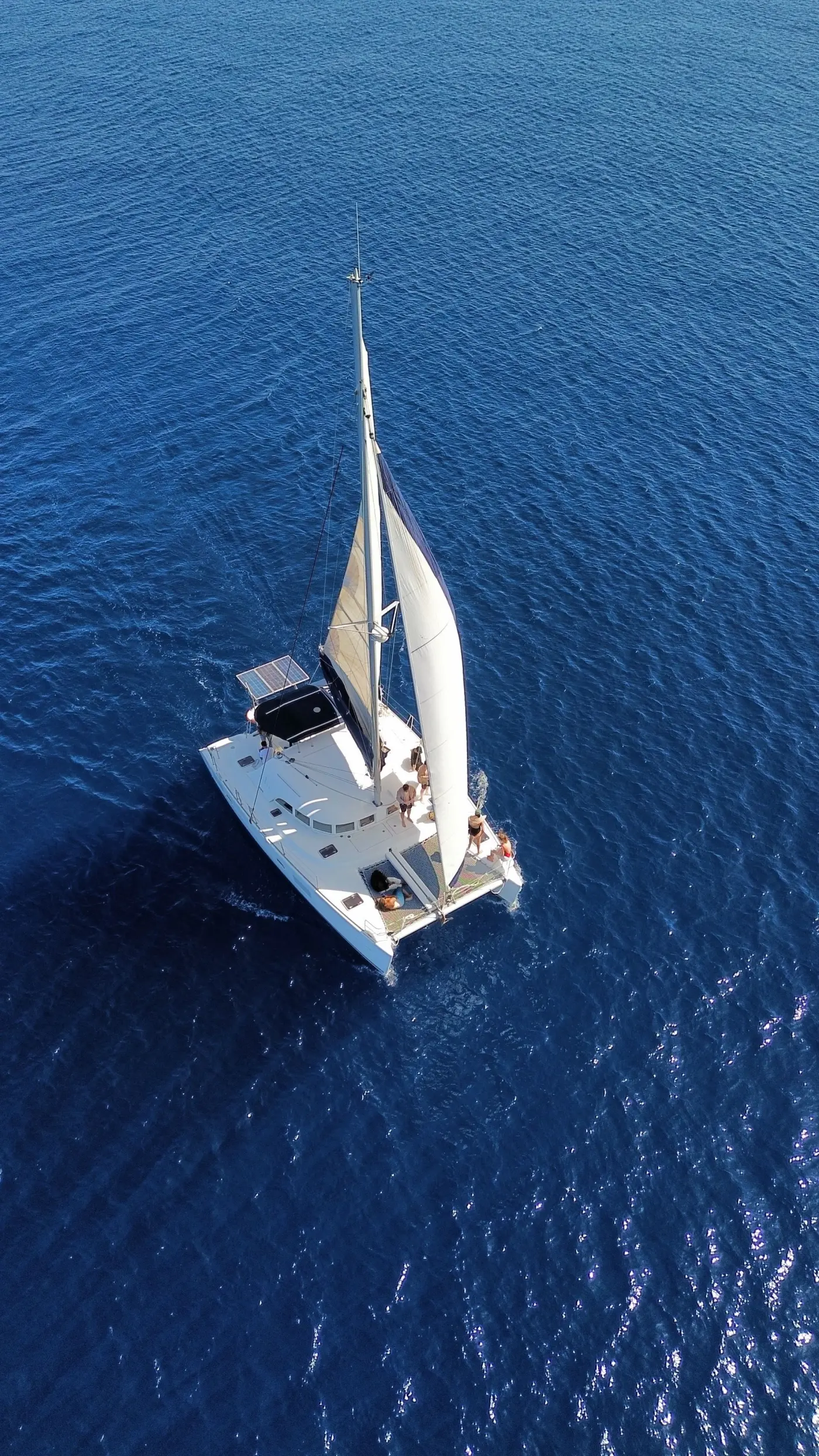
Most people who ask me about chartering a yacht in Greece already have a number in their head, and it is usually wrong. They have read that bareboat is cheap and crewed is expensive, and they assume that settles it. It does not. The honest question is not which one costs less. It is which one fits the trip you actually want, the people you are bringing, and how much of your holiday you are willing to spend at the helm instead of on the swim platform.
I run charters in Greek waters for a living. We arrange both. Our Explorer fleet includes vessels you can take bareboat if you hold the right licenses, and the same fleet can come skippered or lightly crewed if you would rather someone else handle the lines and the route. So I have no reason to push you one way. What follows is the comparison I give people on the phone, with the real costs, the real legal requirements, and the moments where each choice quietly wins or loses.
Read this if you are deciding between the two. By the end you will know which side of the line you fall on, and why.
Crewed vs Bareboat: What the Two Words Actually Mean
A bareboat charter means you rent the yacht and nothing else. No captain, no chef, no stewardess. You are the skipper. You plan the route, you read the weather, you handle the mooring, you provision the food, and you are legally responsible for the vessel and everyone on it. The charter company hands you the keys after checking your sailing credentials, and you sail off on your own.
A crewed charter means the yacht comes with professional crew. On a smaller catamaran that might be a single skipper. On a larger motor yacht it is a captain, a chef, and one or more stewardesses, sometimes an engineer and deckhands as well. You do nothing operational. You wake up, the yacht is already anchored somewhere beautiful, breakfast is on the table, and your only decision is whether to swim before or after coffee.
There is a middle option people forget: a skippered charter. Same idea as bareboat in spirit, but you hire a professional skipper to run the boat while you keep things informal. No chef, no full service, just a qualified person at the helm. It is the bridge between the two extremes, and for a lot of families it is the right answer. We arrange this often on the Explorer fleet, and I have set out the whole middle tier, with the real rate-card numbers, in Skippered or Fully Crewed? The Middle Tier of Greek Chartering.
The Real Cost Difference (With Honest Numbers)
Here is where the myth lives. People hear that a crewed yacht costs three or four times a bareboat one. For comparable vessels in the same week, that is rarely true. The gap is real, but it is narrower than the internet suggests, and the all-in figure tells a different story than the sticker price.
Below are realistic 2026 ranges for a one-week summer charter in Greece, based on what we see across the fleet. These are charter fees before running costs unless noted. Actual numbers move with season, vessel age, and demand.
Bareboat catamaran (4 cabins, 8 guests): charter fee roughly EUR 8,000 to 18,000 per week. You then add fuel, food, mooring, and a security deposit of EUR 3,000 to 6,000. No crew cost.
Skippered catamaran (same vessel, plus a professional skipper): add roughly EUR 1,200 to 1,600 per week for the skipper, plus the skipper's food. Everything else as above.
Crewed catamaran (captain, chef, hostess): charter fee roughly EUR 18,000 to 42,000 per week, plus an APA (Advance Provisioning Allowance) of around 25 to 35 percent of the fee covering food, fuel, and mooring. VAT applies on top.
Crewed motor yacht (full crew, 30 to 50 metres): charter fee from roughly EUR 50,000 to well over EUR 200,000 per week, plus APA and VAT.
Now do the honest math. A bareboat catamaran at EUR 14,000 looks half the price of a crewed one at EUR 28,000. But once you add provisioning you would have paid for anyway, fuel, mooring fees that crewed APA absorbs, and the value of a chef cooking three meals a day for eight people, the experience gap is far larger than the price gap. You are not comparing the same product at two prices. You are comparing two different holidays.
The rule I give people: if saving money is the whole point, bareboat wins clearly, but only if you genuinely enjoy running the boat. If you are chartering to relax, the crewed premium buys back your entire week, and that is usually the better trade for anyone who can afford it.
When Bareboat Is the Right Call
Bareboat is the correct choice when sailing itself is the point, when the boat is the holiday rather than the way to reach it. If you or someone in your group is an experienced skipper who finds genuine pleasure in trimming sails, planning passages, and dropping anchor in a quiet bay you chose yourselves, a crewed yacht will feel like having a stranger in your living room. Take the bareboat.
It also wins on budget, on smaller groups of confident sailors, and on flexibility of a certain kind. There is no crew schedule to respect, no service rhythm to fit into. You eat when you want, you skip dinner and have cheese and wine on deck if you feel like it, and nobody is standing by waiting to clear plates.
Bareboat suits the Ionian especially well. The distances are short, the winds are gentle and predictable in summer, the islands are close together, and the anchorages are forgiving. It is the friendliest Greek region for a competent crew running their own boat.
When Crewed Is the Right Call
Crewed wins the moment relaxation is the goal. If this is the holiday you have worked all year for, you should not spend it as unpaid captain, navigator, cook, and dishwasher. A crew turns a yacht into a floating private hotel that moves while you sleep.
It is the clear choice for families with young children, for groups where nobody holds strong sailing credentials, for anyone chartering a motor yacht (these almost always come crewed), and for the Cyclades in peak season, where the Meltemi wind and busy anchorages make local knowledge worth every euro. A captain who knows which bay to duck into when the wind turns is not a luxury there. He is the difference between a calm night and a miserable one.
Crewed also wins on the things you cannot price easily: a chef who cooks to your family's tastes, a hostess who remembers how your mother takes her coffee, a captain who has sailed these waters for twenty years and takes you somewhere not in any guidebook. That is the part of a charter people remember a decade later.
Crew Composition Explained: Who Is Actually On Board
If you go crewed, here is who you are paying for and what each person does. Crew size scales with the vessel.
Skipper or Captain: runs the yacht, plans the route around weather and your wishes, handles all navigation and mooring, and carries legal responsibility for the vessel. On a bareboat you are this person. On every crewed charter, a professional is.
Chef: provisions and cooks every meal on board, working from the preference sheet you fill in before the trip. A good charter chef will match the standard of a serious restaurant, and will cook around allergies, diets, and the fussiest child you can produce.
Stewardess or Hostess: runs the interior, the service, the cabins, the bar, and the general flow of the day. On larger yachts there are several, and the service moves toward what you would expect at a top hotel.
Engineer and Deckhands: appear on larger motor yachts. The engineer keeps the systems running. Deckhands handle the toys, the tender, the watersports, and the constant work of keeping a big yacht spotless. On a 40-metre-plus yacht the crew can number eight to twelve, which means a crew-to-guest ratio better than any resort on land.
Legal Requirements: What Bareboat Demands That Crewed Does Not
This is the section that catches people out, and it is the single biggest reason a planned bareboat charter turns into a skippered one at the last minute. To take a yacht bareboat in Greece, you must prove you are qualified to skipper it. A crewed charter asks none of this of you, because the licensed captain carries it.
In broad terms, Greek charter operators require the lead charterer to hold a recognised sailing qualification, and usually a second qualified crew member as co-skipper. The most commonly accepted credential is the International Certificate of Competence (ICC), alongside a separate VHF radio operator's certificate. Many operators also ask for a short sailing CV or a signed declaration of experience. The exact documents accepted vary by operator and by the flag the yacht flies, and the rules are reviewed periodically, so you should always confirm current requirements with your broker before you commit to a specific vessel.
The practical trap: people assume a national licence from home will be accepted, arrive in Greece, and discover it will not clear the operator's check. At that point the only fix is to hire a skipper on the spot, which costs more than booking one in advance and removes the saving that made bareboat attractive in the first place. If there is any doubt about your paperwork, sort it before you fly, or book skippered from the start. A crewed or skippered charter sidesteps the entire question, because the qualification sits with the professional, not with you.
How We Arrange Both
We are a broker, not a single fleet, which means our job is to put you on the right boat under the right arrangement, not to sell you whatever we happen to own. If you are a confident sailor who wants a bareboat catamaran in the Ionian for a week, we will set that up and brief you properly. If you want the same boat skippered, we add the skipper. If you want full crew and a chef, we move you to a crewed vessel and handle the contract, the provisioning, and the crew briefing end to end.
Every charter we arrange runs on a proper MYBA-standard contract, the international gold standard, so the terms, the deposit, and the cancellation policy are clear and protect everyone. That holds whether you are taking a modest bareboat cat or a fifty-metre motor yacht. The honest conversation about which one fits you is free, and it is the first thing we do.
Frequently Asked Questions: Crewed vs Bareboat Yacht Charter in Greece
What is the difference between a crewed and a bareboat yacht charter?
A bareboat charter is the yacht alone, with no crew, where you act as the skipper and handle navigation, mooring, provisioning, and full legal responsibility for the vessel. A crewed charter includes professional crew, at minimum a captain and on larger yachts a chef and stewardess too, who run every operational and service aspect of the trip. In short, bareboat means you do the work and crewed means it is done for you. A skippered charter sits between the two: you hire only a professional skipper to run the boat, without full hotel service.
Is a bareboat charter cheaper than a crewed charter?
Yes, the headline charter fee for a bareboat yacht is lower, often roughly half that of a comparable crewed vessel for the same week. But the gap narrows once you add costs the crewed APA already covers, such as fuel, mooring, and provisioning, plus the value of a chef and crew. Bareboat is genuinely cheaper overall, but you pay in effort and responsibility rather than only in money. If relaxation is the goal, the crewed premium often buys back the entire holiday.
What qualifications do I need to charter a bareboat yacht in Greece?
Greek operators generally require the lead charterer to hold a recognised sailing qualification, most commonly the International Certificate of Competence (ICC), together with a separate VHF radio operator's certificate, and frequently a second qualified person aboard as co-skipper. Some operators also ask for a sailing CV or a signed experience declaration. Accepted documents vary by operator and by the yacht's flag, and requirements are reviewed periodically, so always confirm the current list with your broker before booking a specific vessel.
Can I charter a bareboat without a sailing licence?
Not on your own. If you do not hold an accepted qualification, you cannot take the yacht bareboat, but you have two easy alternatives. You can book the same vessel skippered, hiring a professional skipper to run the boat while you keep the trip informal, or you can choose a fully crewed charter. Both options place the legal responsibility and the credentials with the professional, so no licence is required of you.
How many crew are on a crewed yacht charter?
It depends on the size of the yacht. A small crewed catamaran may carry a single skipper, or a skipper and a hostess. A mid-size crewed yacht typically has three: a captain, a chef, and a stewardess. A large motor yacht of 40 metres or more can carry eight to twelve crew, including an engineer and deckhands, which produces a crew-to-guest ratio better than any luxury hotel on land.
Which is better for a family with children, crewed or bareboat?
For most families with young children, crewed is the better choice. A crew lets parents actually be on holiday rather than running the boat, a chef handles fussy eaters and allergies, and a captain manages safety and weather decisions. Bareboat can work for a family where the parents are experienced, confident sailors and genuinely enjoy running the yacht, but for everyone else the crewed option removes the stress that would otherwise fall on the adults.
Do you arrange both bareboat and crewed charters?
Yes. As a broker operating in Greek waters, we arrange bareboat, skippered, and fully crewed charters across the same fleet. Our Explorer collection includes vessels available bareboat for qualified sailors and skippered or lightly crewed for those who prefer help, while our larger yachts come fully crewed. We give you an honest recommendation on which arrangement fits your group, then handle the MYBA contract and logistics whichever way you go.
Go Deeper
If you are still choosing a vessel type, read Motor Yacht, Catamaran, Sailing Yacht, or Gulet? How to Choose the Right Charter Yacht in Greece.
For the full cost picture, see How Much Does a Yacht Charter in Greece Actually Cost? The Complete 2026 Breakdown.
On where to sail, compare Cyclades vs Ionian Yacht Charter 2026.
And to pick your week, read Best Time to Charter a Yacht in Greece: Month-by-Month Guide 2026.
Not Sure Which One Fits You?
Tell me your group, your dates, and whether anyone aboard wants to skipper. I will tell you honestly whether bareboat, skippered, or crewed is the right call, and arrange whichever it is.
George P. Biniaris is the Managing Broker of George Yachts Brokerage House LLC, an IYBA member brokerage operating exclusively in Greek waters. To talk through your charter, book a free consultation or email george@georgeyachts.com.
Sources & Notes
Charter fee and APA ranges reflect George Yachts' 2026 working figures across Greek-waters vessels and move with season, vessel age, and demand.
Bareboat qualification requirements (ICC, VHF certificate, co-skipper, experience declaration) are general and vary by operator and by the yacht's flag state. Confirm current requirements before booking.
APA (Advance Provisioning Allowance) conventionally runs about 25 to 35 percent of the charter fee and covers fuel, food, mooring, and similar running costs on crewed charters.
All charters arranged by George Yachts run on MYBA-standard contract conditions.
VAT on Greek charters applies on top of the charter fee at the prevailing rate; your broker provides the exact figure before signing.
Written by George P. Biniaris, Managing Broker at George Yachts Brokerage House LLC. IYBA Charter Active Member and licensed skipper, working exclusively in Greek waters across the Ionian, Cyclades, Saronic, and Sporades.


