
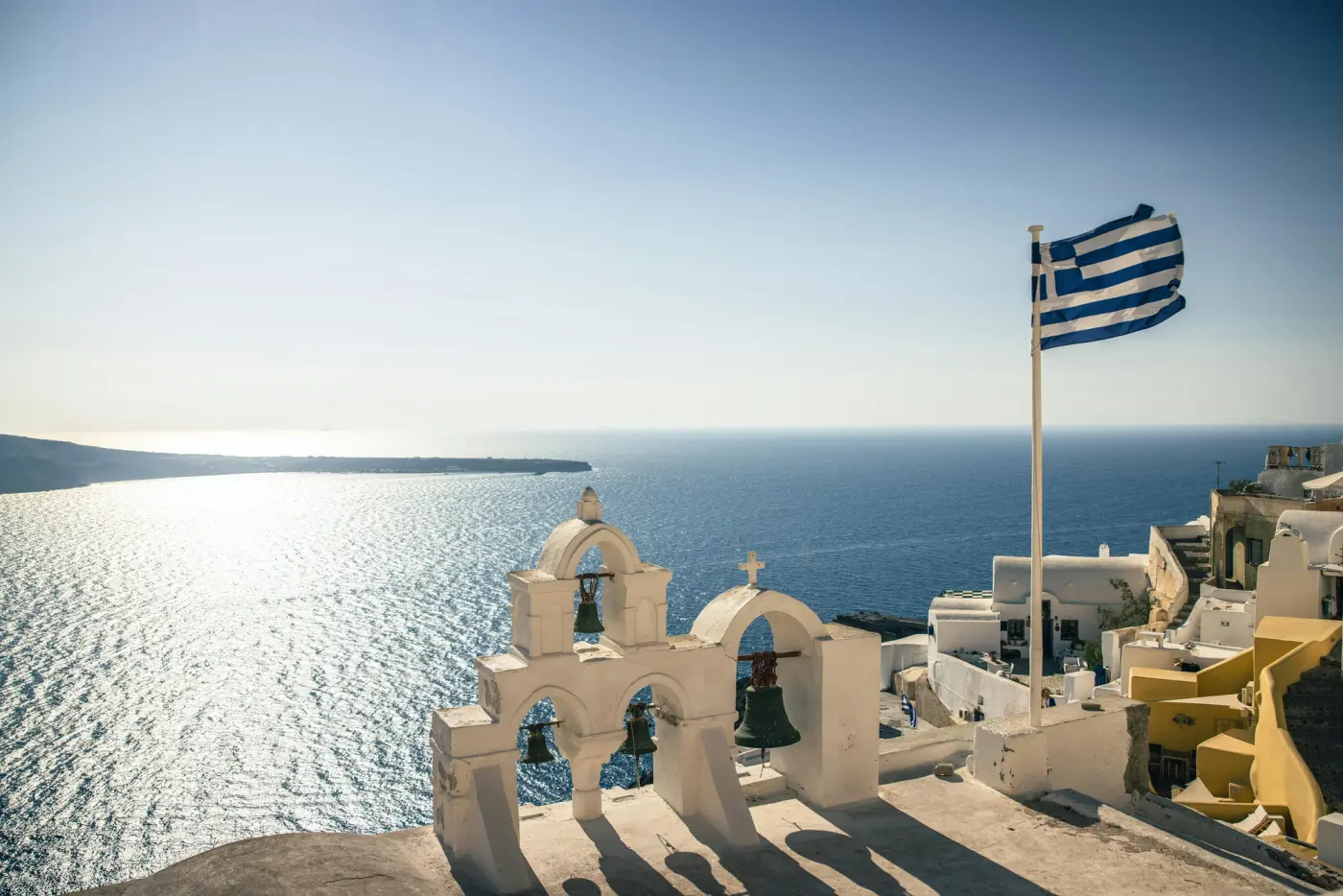
The Saronic Gulf is the only luxury charter route in Greece where you can step off a flight at Athens International and be aboard a crewed yacht within 45 minutes. Five days. Five islands. No domestic connections, no ferry queues, no wasted transfer day. Here is a day-by-day operational itinerary from a broker who places clients on this route every season.
Why Does the Saronic Gulf Work for Clients Who Hate Wasting Time?
Every charter I manage begins with the same constraint: time.
A family flying into Athens from London, New York, or Dubai has already spent half a day in transit. The last thing they want is another 5-hour ferry to Mykonos or a domestic hop to Corfu. They want the water. Now.
The Saronic Gulf delivers exactly that. Marina Alimos sits 35 minutes from Athens International Airport by car. Marina Zeas in Piraeus is even closer. Your crew is provisioned, your captain has the route plotted, and the Saronic's first anchorage, Aegina, is under 20 nautical miles away.
What makes this route exceptional is not convenience alone. It is the compression of variety into short sailing distances. Within a 5-day charter, you move from a car-free 18th-century harbour town (Hydra) to a Venetian island channel so narrow your cocktail glass reflects the houses on both sides (Poros), to an anchorage off Dokos where you will likely be the only vessel for the night. The longest single leg is roughly 22 nautical miles. Most are under 15.
For clients chartering a crewed yacht charter in Greece for the first time, the Saronic is the route I recommend before anything else.
What Does a 5-Day Crewed Saronic Itinerary Actually Look Like?
This is not a brochure itinerary. This is the route I build for clients, adjusted for wind, harbour availability, and the things you only learn by placing people on these waters season after season.
Day 1, Athens (Marina Alimos) → Aegina
Distance: 18 NM | Sailing time: ~1.5 hours by motor yacht
Embark after lunch. Your stewardess has the welcome drinks ready; your chef has already sourced fish from the morning market at Varvakeios in central Athens, a detail most crews handle if you request it the day before.
Arrive in Aegina town harbour by late afternoon. The Temple of Aphaia sits 20 minutes inland, one of the best-preserved ancient Greek temples anywhere, and almost entirely ignored by the yacht crowd. Your captain can arrange a driver.
Dinner aboard, anchored off the town. Aegina's pistachios will appear in your dessert, they are the best in Greece, and your chef knows it.
George's Inside Info: Skip the main harbour if you are on a yacht over 20 metres. The commercial port gets congested with hydrofoils until 18:00. Ask your captain to anchor off Kolona beach instead, 5 minutes by tender to town, zero wake, and a view of the temple on the hill at sunset.
Day 2, Aegina → Poros
Distance: 22 NM | Sailing time: ~2 hours
The approach to Poros is one of the most dramatic in Greek waters. You enter a narrow channel, barely 300 metres wide, between the island and the Peloponnese mainland. The town rises directly above you on both sides. At night, the lights reflect off the water and it feels like sailing through a village.
Moor stern-to at the town quay if your vessel permits (up to ~25m), or anchor in the channel with a line ashore. Your chef provisions fresh fruit and vegetables from the small market behind the clock tower.
Afternoon: swim stop at Russian Bay on the south coast. The water is 3-4 metres deep, sheltered, and the seabed is sand, ideal for families with children.
Day 3, Poros → Hydra
Distance: 12 NM | Sailing time: ~1 hour
Hydra is the centrepiece of any Saronic itinerary, and for good reason.
No cars. No motorbikes. No airport. Supplies arrive by donkey and water taxi. The harbour is lined with 18th-century stone mansions built by merchant captains who ran the blockade during the Greek War of Independence. Leonard Cohen lived here in the 1960s. The atmosphere has not changed much since.
Moor on the outer harbour wall if your captain can secure a spot (arrive before 14:00 in high season). Otherwise, anchor in Mandraki bay, a 10-minute walk east of town, quieter, and your tender ride to the harbour takes 3 minutes.
Dinner ashore. Omilos on the harbour rocks. Sunset on the ramparts of the Bastioni. This is the evening your clients will photograph most.
George's Inside Info: Hydra's harbour has a strict no-engine rule for all vessels within the port, this includes tenders. If your crew does not know this, you will have a very public encounter with the port police. I brief every captain on Hydra protocol before departure.
Day 4, Hydra → Dokos → Spetses
Distance: 8 NM to Dokos, then 10 NM to Spetses
Morning: anchor off Dokos, the small island between Hydra and Spetses. Population: roughly 30 in summer, zero in winter. The anchorage on the north side sits over what marine archaeologists believe is the oldest known shipwreck in the world, a vessel from approximately 2200 BC.
Swim. Paddleboard. Lunch on deck in near-total silence. This is the Saronic that nobody writes about.
Afternoon: continue to Spetses. More cosmopolitan than Hydra, with horse-drawn carriages replacing donkeys and a livelier waterfront. The Old Harbour on the east side is where your captain should aim, less crowded than Dapia, and closer to Poseidonion Grand Hotel if your clients want drinks ashore.
Day 5, Spetses → Porto Heli → Return to Athens
Distance: 6 NM to Porto Heli, then 52 NM back to Athens (or disembark at Porto Heli)
Option A: A morning swim at Zogeria bay on Spetses' west coast (pine trees to the waterline, sandy bottom, usually empty before 11:00). Then cross to Porto Heli on the Peloponnese mainland, 15 minutes. Lunch at the Nikki Beach or Amanzoe beach club. Disembark here; your transfer to Athens takes 2.5 hours by car, or 20 minutes by helicopter.
Option B: Depart Spetses early and cruise directly back to Marina Alimos. The leg is roughly 52 NM, about 3.5 hours on a motor yacht at 15 knots. Arrive by early afternoon, disembark, and you are at the airport within the hour.
Most of my clients choose Option A. The drive along the Peloponnese coast through Epidaurus is worth it on its own.
How Much Does a Crewed Saronic Gulf Charter Cost in 2026?
Pricing depends on yacht size, season, and crew complement. Here is what the market looks like for Summer 2026:
Crewed Catamaran (14 to 16m), Weekly rate: EUR 17,000 to 22,000 base · five nights: pro rata on the same yacht · Guests: 6 to 8 · Crew: 2 to 3
Crewed Motor Yacht (20 to 25m), Weekly rate: €25,000 to €45,000 · 5-day rate (approx.): €19,000 to €34,000 · Guests: 6 to 10 · Crew: 3 to 4
Crewed Motor Yacht (30m+), Weekly rate: €55,000 to €120,000 · 5-day rate (approx.): €42,000 to €90,000 · Guests: 10 to 12 · Crew: 5 to 7
Important: These are base charter fees only. Add the Advance Provisioning Allowance (APA), a pre-charter cash deposit, typically 25 to 35% of the charter fee, covering fuel, food, berthing, and running expenses. On a Saronic itinerary, fuel costs run significantly lower than a Cyclades crossing because distances are short and seas are sheltered.
The five-night Saronic week is priced per yacht, never by the head, and the chef who cooks every meal aboard comes with the yacht.
That number surprises people. It should.
When Is the Best Time to Charter in the Saronic Gulf?
The Saronic has the longest comfortable charter season in Greece: late April through mid-October.
Here is why. The Saronic Gulf sits between the Greek mainland and the Peloponnese peninsula. This geography creates a natural windbreak against the Meltemi, the strong northerly that dominates the Aegean from mid-June through August, regularly hitting Force 5 to 7 in the Cyclades.
In the Saronic, summer winds average Force 3 to 4. Seas remain calm. Motor yachts cruise efficiently. Catamarans sail without the constant tacking required in the open Aegean. For families with young children or guests who are new to yachting, this matters.
Seasonal breakdown:
- Late April to May: Water temperature 18 to 20°C. Fewer crowds. Spring wildflowers on Poros and Aegina. Ideal for couples and cultural itineraries (Epidaurus, Mycenae day trips).
- June, mid-July: The sweet spot. Water hits 23 to 25°C. Wind is mild. High season pricing begins but harbours are not yet overcrowded.
- Mid-July to August: Peak season. Hydra's harbour fills by noon. Book anchorage permits 2+ months in advance. Highest pricing, but also the most reliable weather.
- September to October: Shoulder season. Water stays warm (23 to 24°C). Crowds thin out. Pricing drops 15 to 25%. Many repeat clients prefer this window.
What Makes the Saronic Different From Other Greek Yacht Charter Routes?
Every charter region in Greece has a character. Here is how the Saronic compares:
Distance from Athens airport: Saronic Gulf, 35 min (Marina Alimos) · Cyclades, 3 to 5 hours (ferry/flight) · Ionian, 4 to 6 hours (flight + transfer)
Average sailing distance per day: Saronic Gulf, 12 to 22 NM · Cyclades, 25 to 45 NM · Ionian, 20 to 35 NM
Wind conditions (summer): Saronic Gulf, Force 3 to 4, sheltered · Cyclades, Force 5 to 7, open Aegean · Ionian, Force 2 to 4, sheltered
Best for: Saronic Gulf, First-timers, families, time-pressed clients · Cyclades, Experienced sailors, island-hopping, parties · Ionian, Extended cruising, green landscapes
Season length: Saronic Gulf, Late April, mid-October · Cyclades, Mid-June to September · Ionian, Late May, mid-October
The Saronic is not for everyone. Clients who want the nightlife of Mykonos or the caldera of Santorini should look elsewhere. But for clients who prioritize ease, proximity to Athens, and variety in a short timeframe, no other route matches it.
Frequently Asked Questions About Saronic Gulf Yacht Charters
How far is the Saronic Gulf from Athens Airport?
Marina Alimos sits 35 minutes from Athens International Airport by car. Marina Zeas in Piraeus is 25 minutes. Both are common embarkation points for Saronic charters.
Can I charter a yacht in the Saronic for less than a week?
Yes. Unlike the Cyclades, where most charters require a 7-day minimum, many Saronic yachts accept 3 to 5 day charters. This makes the route ideal for weekend itineraries or add-ons to an Athens business trip.
What happens if the weather turns bad during my Saronic charter?
The Saronic's geography provides natural shelter. Even during unsettled weather, your captain can find protected anchorages on Poros, in Epidaurus bay, or on the eastern coast of Aegina. Open-water crossings are not required.
Do I need to book a berth in Hydra in advance?
In high season (July to August), berths on Hydra's harbour wall fill quickly. Your captain or broker should arrange a mooring permit in advance if berthing is essential. Otherwise, anchoring in Mandraki bay is the standard alternative.
Is the Saronic suitable for children?
The Saronic is one of the best regions in Greece for families with young children. Calm seas, short sailing legs, sandy anchorages (Russian Bay, Zogeria), and the car-free environment of Hydra make it a low-stress experience.
Ready to Plan Your Saronic Gulf Charter?
The Saronic Gulf is not the route most people imagine when they think of a Greek yacht charter. It does not have Santorini's cliffs or Mykonos's reputation. What it has is practicality: the shortest airport-to-yacht transition in Greece, consistently calm sailing conditions, and a compression of variety that makes every day feel complete.
If you are exploring options for Summer 2026, or simply want to understand what can go wrong without a broker, I am available for a free 30-minute consultation.
No sales pitch. Just the route from someone who runs it from Marina Alimos to Hydra every month.
George P. Biniaris | Managing Broker, George Yachts | IYBA Member
Athens: +30 6970380999 | London: +44 2037692707 | Miami/WhatsApp: +1 7867988798


