
You have read about the costs. You have compared the yacht types. You know Greece is the destination. But there is one question nobody answers properly: what does a day on a crewed yacht charter actually feel like?
As an IYBA charter broker who coordinates every detail of these voyages from Athens, I can tell you that the brochure version and the real version are two different things. The real version is better. Here is what an actual day looks like on a crewed motor yacht in the Greek islands, and why repeat clients say this is the only form of travel they will never give up.
07:30, You Wake Up in a Different Place
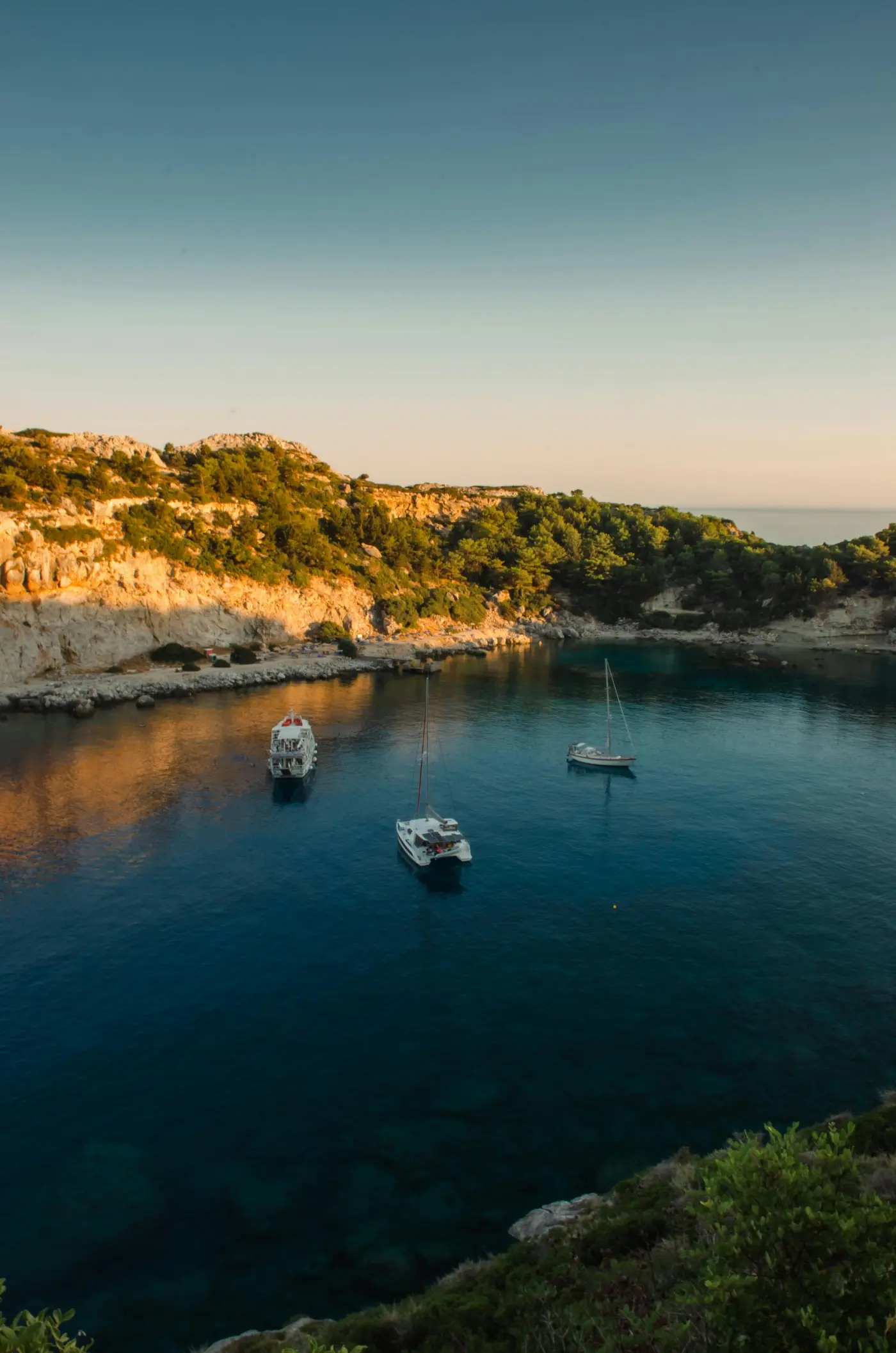
This is the part nobody prepares you for. You went to sleep anchored off Paros. You wake up and the captain has repositioned the yacht to a sheltered cove on the western coast of Antiparos. There is no other vessel in sight. The water below your cabin window is transparent down to the sand.
Nobody knocked on your door. Nobody set an alarm. The crew has been awake since six, and the coffee is already made. Your only decision is whether to drink it on the aft deck or the sundeck.
This is the fundamental difference between a yacht charter and a villa, a resort, or a cruise. You are not going to the destination. The destination comes to you, and it changes every morning.
08:30, Breakfast Is Not What You Think
Forget a buffet. This is not a hotel. Two weeks before your charter, the chef received your preference sheet, allergies, favourite cuisines, what your children will and will not eat, what you had on your last yacht and loved, what you had and hated.
Breakfast is built around you. Greek yoghurt with Naxian honey and hand-picked walnuts. Freshly squeezed orange juice from fruit bought that morning at a harbour market the crew visited at dawn. Eggs exactly the way you described in paragraph four of your preference sheet. The chef remembers everything.
On a crewed yacht charter in Greece, food is not a service, it is a relationship between the chef and your family that develops across the week. By day four, they are cooking things you did not know you wanted.
10:00, The Morning Swim You Cannot Get Anywhere Else
The swim platform drops. The toys come out, paddleboards, kayaks, snorkelling gear, the jet ski if the yacht carries one. But the real luxury is the location. Your captain has chosen an anchorage that charter yachts on fixed routes never reach, because he knows these waters year-round. No crowds. No noise. Just your family and the Aegean.
This is why local knowledge matters more than the yacht itself. A 40-metre yacht anchored in the wrong spot is a worse experience than a 25-metre yacht in the right cove. Your broker's job is to make sure the captain assignment matches the itinerary, and that is a decision made months before you arrive.
The best anchorages in the Cyclades, the ones with turquoise water, no swell, and complete privacy, are not on any app. They live in the captain's memory, earned across twenty summers in these islands.
13:00, Lunch Happens Wherever You Want It
Option one: the chef prepares a full Mediterranean spread on board, grilled octopus, fresh horiatiki, chilled rosé, and something unexpected she invented that morning because the fisherman at the port had red mullet.
Option two: the captain suggests a taverna on the shore that has no website, no Google reviews, and no tourists. You take the tender in. The owner greets your captain by name. You eat the best meal of the trip without knowing it yet.
Both options exist because you are on a crewed charter with a captain who has been sailing these islands for decades. This is not a floating hotel following a fixed route. It is a completely private experience that adapts to your mood, the weather, and the opportunities of the day.
16:00, The Afternoon That Sells the Next Charter
The yacht repositions while you rest. The Cycladic light at four in the afternoon is something photographers plan entire careers around. Your children are in the jacuzzi. You are reading on the foredeck, and the only sound is the hull cutting through calm water at eight knots.
By 17:00 you are anchored off a new island. Perhaps Koufonisia, where the sand looks Caribbean but the taverna behind the dunes serves lobster pasta for a fraction of what Mykonos charges. Perhaps Sifnos, where the hiking trails end at a monastery with a sunset that makes Santorini feel overrated.
This is the moment when most clients mentally book their next charter. Not because of the yacht. Because of how they feel.
20:00, Dinner Is the Main Event
The crew has set the aft deck with linens and candles. The chef has prepared a five-course meal that would hold its own in any Michelin-starred restaurant in Athens. Tonight it is sea bass caught locally, with capers from Pantelleria, and a dessert built around mastiha from Chios.
Your wine has been chilled to exactly the temperature you like, because the stewardess noticed on day two. The playlist is the one your spouse mentioned in passing during embarkation. Nothing is accidental. Everything is observed, remembered, and delivered without being asked.
This is what separates a crewed yacht charter from any other form of luxury travel. It is not about the size of the yacht. It is about a crew of four to twelve people whose entire purpose for the week is making your experience flawless.
23:00, The Stars Are Not a Metaphor
When you anchor away from ports and towns, the light pollution drops to zero. The Aegean sky at midnight in July is the kind of view that luxury brands spend millions trying to evoke in advertising. On a crewed charter in Greece, it is just Tuesday.
You fall asleep to the sound of the sea. Tomorrow the yacht will move again. The captain already has three options planned depending on the wind. The chef already knows what you want for breakfast. Your broker back in Athens has already confirmed the restaurant reservation on Mykonos for Thursday, because you mentioned it once during your discovery call.
What Makes This Possible: The Work You Never See
Every effortless moment described above is the result of weeks of preparation. The preference sheet. The captain briefing. The APA budget that ensures provisions, fuel, and port fees are handled seamlessly. The MYBA contract that protects both you and the yacht owner. The broker who matched you to this specific vessel because the crew profile, the yacht layout, and the itinerary aligned with what you actually need, not just what looked good in a photo.
The difference between a good charter and an unforgettable one is never the yacht. It is the people who plan it and the people who deliver it on board.
Frequently Asked Questions About Crewed Yacht Charters in Greece
What is included in a crewed yacht charter in Greece?
A crewed yacht charter typically includes the yacht itself, the full professional crew (captain, chef, stewardess, and deckhands depending on vessel size), fuel for the agreed itinerary, port fees, water toys, and all onboard meals and drinks provisioned through the APA (Advance Provisioning Allowance). Flights, transfers to the marina, and personal excursions onshore are not included. Your broker provides a full cost breakdown before you sign the MYBA charter agreement.
How many crew members are on a crewed charter yacht?
Crew size depends on yacht length and guest capacity. A 25-metre motor yacht typically carries 3 to 4 crew, a captain, a chef, and one or two stewardesses. A 50-metre superyacht may carry 8 to 12 crew, including deckhands, an engineer, and dedicated service staff. The crew-to-guest ratio on a luxury charter is usually 1:1 or better, which is higher than any five-star resort in the world.
What is a preference sheet and why does it matter?
The preference sheet is a detailed questionnaire sent to guests before the charter. It covers dietary needs, allergies, food and drink preferences, activity interests, sleep habits, music taste, and any special requests. The chef and crew use this document to personalise every aspect of your experience, from breakfast to the playlist at dinner. A good broker ensures the preference sheet is thorough and that the crew receives it with enough time to prepare properly.
Can I choose my own itinerary on a crewed yacht charter?
Yes. Unlike cabin charters or flotilla holidays, a private crewed charter gives you complete flexibility over the route. Your broker and captain will propose an itinerary based on your interests, the season, and the weather, but you can change course at any point during the trip. Want to stay an extra night in Koufonisia? Skip Mykonos entirely? The itinerary adapts to you, not the other way around.
What is the best time of year for a yacht charter in Greece?
The Greek charter season runs from May to October. June and September offer the best combination of warm weather, calm seas, and fewer crowds. July and August are peak season, ideal for families during school holidays, but anchorages and restaurants are busier. Late May and early October are excellent for couples seeking privacy and lower charter rates, though water temperatures are slightly cooler.
How far in advance should I book a crewed yacht charter in Greece?
For peak season (July to August), the most desirable yachts are fully booked by March. Booking 6 to 9 months ahead gives you the widest selection of vessels and crew. For shoulder season (June, September), 3 to 4 months is usually sufficient. Last-minute bookings are possible but limit your choices significantly, especially for larger yachts or specific crew profiles.
What does a yacht charter broker actually do?
A charter broker acts as your advocate throughout the entire process. Before the charter, the broker matches you to the right yacht and crew based on your group size, interests, and budget. They negotiate the best available rate, coordinate the MYBA contract, manage the APA budget, handle the preference sheet process, and brief the captain on your itinerary. During the charter, your broker remains available for any issue. After the charter, they handle the APA reconciliation. A good broker saves you from expensive mistakes and ensures the experience matches your expectations.
Is a crewed yacht charter in Greece safe for families with young children?
Absolutely. Crewed charters are one of the safest and most comfortable ways to travel with children in the Greek islands. The crew monitors safety on deck, the chef prepares child-friendly meals, and the flexible itinerary means you can avoid rough seas or choose calm anchorages. Many yachts carry water toys, paddleboards, and snorkelling gear suitable for children. The key is selecting a yacht with the right layout, your broker should ensure the cabin configuration, deck space, and crew experience match a family with young children.
How much does a crewed yacht charter in Greece cost?
Charter rates in Greece vary widely based on yacht size, age, crew, and season. A 25-metre motor yacht typically starts at €25,000 to €35,000 per week. A 40-metre yacht ranges from €80,000 to €150,000 per week. Superyachts above 50 metres can exceed €300,000 per week. On top of the base charter fee, guests pay the APA (usually 25 to 35% of the charter fee) to cover fuel, food, drinks, and port fees. VAT is also applicable in Greek waters. For a full cost breakdown, read our complete guide on yacht charter pricing.
Ready to Experience It?
George P. Biniaris is the Managing Broker of George Yachts Brokerage House LLC, an IYBA member brokerage operating exclusively in Greek waters. He is based in Athens and works directly with clients from the United States, United Kingdom, and the Middle East to plan crewed yacht charters across the Cyclades, the Ionian and the Saronic Gulf. To start planning your charter, book a free consultation or email george@georgeyachts.com.
P.S. Every hour described above is carried by specific people with specific jobs. Who does what aboard, from captain to stewardess, is laid out in my guide to yacht charter crew roles in Greece.
On a luxury yacht charter in Greece from the top tier of the list, the same day runs with a chef at the galley and a stewardess on deck, from EUR 60,000 a week.


