
Yacht Charter Crew in Greece: Captain, Chef, and Stewardess Roles Explained
The yacht gets the photographs. The crew makes the week. You are not really paying for a hull, you are paying for the people who run it, and most first-time charterers step aboard without knowing who does what, who outranks whom, what any of them earn, or what they are expected to tip at the end. I brief these crews before your charter, so here is the honest map.
This is written for Greek waters, where the crews tend to be smaller and the relationships closer than on a 100 metre boat in Monaco. The roles are the same. The scale is friendlier.
Who Is Actually on Board? The Crew Hierarchy
Every crewed yacht is organised into departments, and they all answer to one person. The captain sits at the top with final authority over the vessel, the route, and everyone's safety. Below the captain, the boat splits into deck, interior, galley, and on larger yachts, engineering. Each department has a head who reports to the captain.
Size decides how many people fill those roles. On the catamarans and 20 to 30 metre motor yachts that make up most Greek charters, the crew is lean. Step up to 35 metres and above and the departments fill out. As a rough guide:
- 12 to 18 metre catamaran or motor yacht: two to three crew, usually a captain, a chef or host, and one stewardess.
- 24 to 34 metre motor yacht: three to five crew, typically a captain, a chef, one or two stewardesses, and often a deckhand.
- 35 to 45 metres: five to eight crew, adding a first officer, a bosun, a dedicated chef, a chief stewardess with a stew, and an engineer.
- 50 metres and above: nine or more, with every department fully staffed.
If you are still deciding whether to have full crew at all, that is a separate question we cover in crewed versus bareboat in Greece.
What Does Each Crew Role Actually Do?
The captain. Command of the vessel and the final say on anything that touches safety. The captain plans and adapts the route, reads the weather, makes the hard call when a beautiful anchorage is the wrong choice in a strong meltemi, manages the crew, and is your main point of contact for the shape of each day. If the captain says the crossing waits until morning, it waits.
The first officer or mate. Second in command on larger yachts. Runs navigation watches, often drives the main tender, leads safety drills, and steps up when the captain is off duty.
The bosun and deckhands. The exterior team. They keep the outside of the yacht immaculate, handle lines at every dock, launch and run the water toys, drive the tenders, and rig the swim platform. On a Greek charter these are usually the people setting up your paddleboards and Seabobs and keeping an eye on the swimmers.
The chef. The single biggest driver of how the week feels after the captain. The chef provisions to your preference sheet, cooks every meal from breakfast to a late dinner under way, works around allergies and dislikes, and does it from a galley a fraction of the size of a restaurant kitchen. A good charter chef will quietly remember that your daughter eats her pasta plain, and never mention it again.
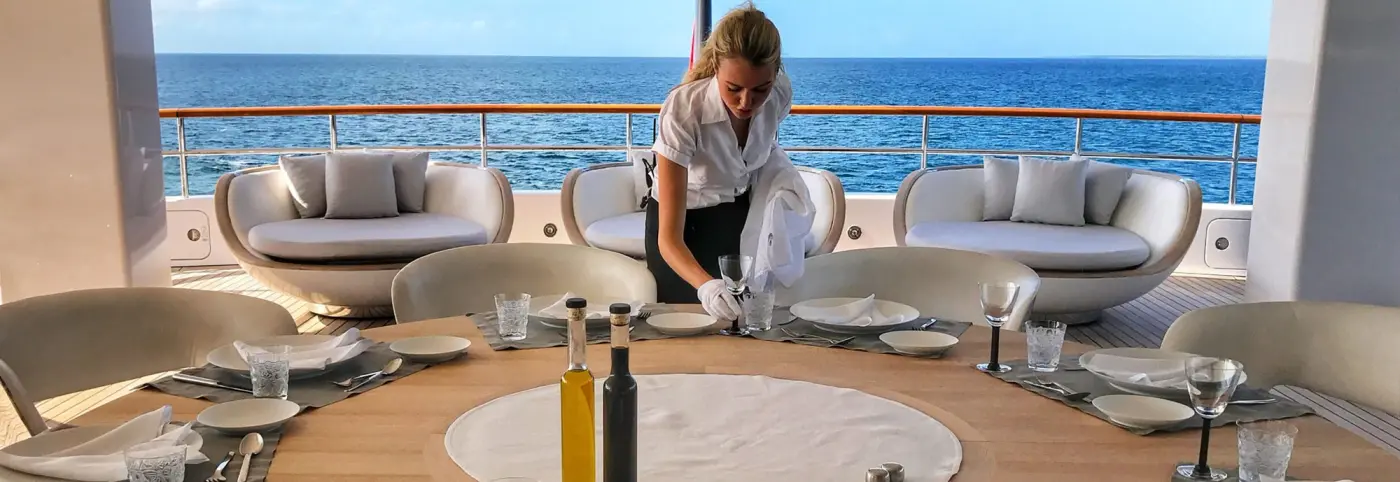
The chief stewardess and stews. The interior team, and the rhythm of your day. They run service and housekeeping, turn the cabins around, set the table, mix the drinks, manage the laundry, and anticipate what you want before you ask. The chief stew runs the interior like a small hotel and is your day-to-day contact for anything inside the boat or at the table.
The engineer. On yachts large enough to carry one, the engineer keeps the invisible things working: air conditioning, fresh water, power, stabilisers, tenders. You rarely see them, which usually means they are doing their job well.
To watch all of this come together across a single day, see our hour-by-hour account of a Greek charter.
What Do Yacht Crew Earn, and Who Actually Pays Them?
Here is the part that confuses people. You do not pay the crew's salary. Their wages are paid by the yacht's owner or management company, and they are already built into the economics of the boat. The one direct payment that comes from you is the gratuity at the end, which I cover next. The salary figures below are context, not a bill.
Pay depends on role, yacht size, experience, and whether the boat runs charters or stays private. As a rough guide, entry-level crew such as junior deckhands and stewardesses earn roughly 2,000 to 3,500 euros a month, according to recruiter Flying Fish's 2026 salary guide. Chefs commonly sit in the mid to high single thousands and climb well beyond that with reputation. A chief stewardess often earns north of 6,000 a month, and captains on larger yachts run from around 10,000 to 16,000 euros and up.
Sources: Flying Fish Superyacht Crew Salary Guide 2026 and the Dockwalk Salary Survey.
Why this matters to you is simple. Charter crews usually earn a mid-range base and make the rest through tips during the season, which is exactly why the gratuity is taken seriously, and why a well-run charter crew works as hard as it does.
How Much Should You Tip the Crew in Greece?
Gratuity is the most misunderstood number in chartering, partly because the Caribbean and the Mediterranean play by slightly different rules. The Mediterranean Yacht Brokers Association, whose contract is the standard for crewed charters, recommends a gratuity of 5 to 15 percent of the base charter fee for excellent service, with 10 percent treated as the customary middle in the Med.
Sources: Boat International tipping guide and YachtCharterFleet on crew gratuities.
In practice, European crews tend to see 10 percent as a fair tip and 15 percent as generous, and 10 to 15 percent of the base fee is the range I quote. American guests sometimes go higher, carrying their own tipping culture aboard. It is calculated on the base charter fee only, not on the APA and not on VAT.
On an 80,000 euro week, 10 percent is 8,000 euros, which across a crew of four is roughly 2,000 each. At 15 percent it is 12,000. You hand one amount, in cash, to the captain on the last evening, or arrange a transfer through your broker, and the captain divides it fairly across the crew. You tip once, to the captain, not person by person.
One honest note. If a 'suggested gratuity' appears printed in your welcome letter, that is considered poor form in the professional charter world. Mention it to your broker rather than feeling cornered. The full money picture, with APA and VAT alongside the tip, sits in our complete cost breakdown.
How Should You Interact With the Crew?
The best service on a charter is not bought, it is earned by how you treat the people delivering it. Warm, clear, and respectful gets you further than distant or demanding ever will. Treat the crew as the professionals they are, and they will quietly move mountains for you.
Your most powerful tool is the preference sheet you fill in before the charter. Be honest and specific: allergies, the foods you cannot stand, how late you like to sleep, whether there is a birthday to mark, how strong you take your coffee. The crew can only deliver what they know, and the detail you give now becomes the magic you notice later. We walk through that form in the booking-to-boarding process.
On board there is a simple rule for who to talk to. Anything about the route, timing, weather, or safety goes to the captain. Anything about food, service, the cabins, or the table goes to the chief stewardess. You do not need to chase individual crew members, the heads of department will carry it.
Respect runs both ways. The crew have private quarters and off-watch hours, so give them their space as they give you yours. Say what you want plainly rather than hinting, because a clear request is a kindness to people trying to read your mind. This is where the Greek idea of filotimo shows up on the water. When guests treat crew like people rather than staff, the crew respond with a level of care that no contract could ever require.
Frequently Asked Questions
How many crew are on a yacht charter in Greece?
It depends on the yacht. Smaller catamarans and motor yachts of 20 to 30 metres usually carry two to five crew, typically a captain, a chef, and one or two stewardesses, sometimes a deckhand. Yachts of 35 metres and up carry fuller departments of five to nine crew or more.
Who is in charge on a charter yacht?
The captain has final authority over the vessel, the route, and the safety of everyone aboard. The heads of the deck, interior, galley, and engineering departments all report to the captain, who has the last word on where you go and when.
How much should you tip yacht crew in Greece?
The customary range on a Greek crewed charter is 10 to 15 percent of the base charter fee, with 10 percent the everyday middle in the Mediterranean and 15 percent read as generous. American guests sometimes go higher. The tip is calculated on the base fee, not the APA or VAT, and
Do I pay the crew's salaries?
No. Crew wages are paid by the yacht's owner or management company and are already part of the boat's economics. The only payment that comes directly from you is the end-of-charter gratuity, handed to the captain to share among the crew.
Who do I talk to on board for what?
Route, timing, weather, and safety go to the captain. Food, service, cabins, and the table go to the chief stewardess. The heads of department pass requests down, so you never need to manage individual crew members directly.
What is a preference sheet and why does it matter?
It is the form you complete before your charter listing your tastes, allergies, routines, and any occasions to celebrate. The crew provisions and plans the whole week around it, so the more honest and detailed you are, the more personal the charter feels.
Written by George P. Biniaris, Managing Broker at George Yachts, working exclusively in Greek waters as a licensed skipper with years of hands-on experience briefing captains and crew across the Ionian, Cyclades, Saronic, and Sporades. As featured in Forbes, May 2026.
Planning a crewed charter in Greek waters? Book a free 30-minute consultation and we will match you to a yacht and a crew worth tipping well.


