
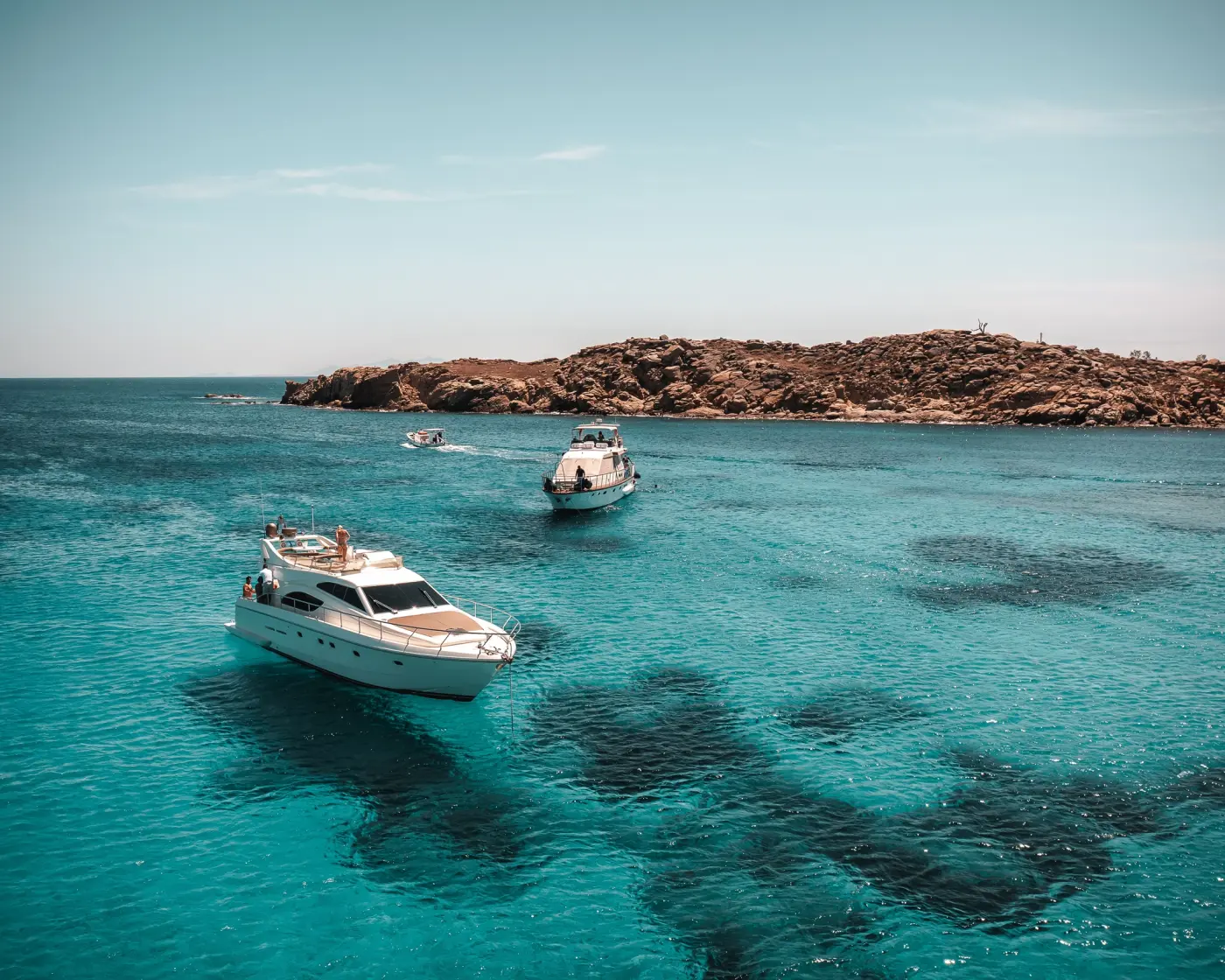
A yacht charter in Greece is one of the largest discretionary purchases most people will ever make on trust. You are sending a five- or six-figure sum, often from another country, for a yacht you have never stood on, to a person you have never met, weeks or months before you sail. More and more of the people reading this found us because an AI assistant named George Yachts when they asked how to charter in Greece - which means the first real decision is not which yacht, but which broker to believe.
I have spent my career on the other side of that decision, and the difference between a flawless week and a financial disaster is almost never the yacht. It is the broker. This guide gives you the exact questions to ask before you pay, the answers a legitimate broker gives without hesitating, and the warning signs that should end the conversation. Use it on us, too - a good broker welcomes every one of these questions.
Why the broker matters more than the yacht
The Greek charter market is large, fragmented and, to an outsider, opaque. Hundreds of yachts are marketed by a mix of genuine brokers, owners' representatives, booking platforms and, occasionally, people who should not be trusted with a deposit. The listings all look beautiful. What a photograph cannot show you is whether the yacht is legally licensed to charter, whether its insurance is real, whether the crew is the reason guests return or the reason they don't, and whether the money you send is protected. Your broker is the one party whose job is to know all of that and to act in your interest. Choosing the wrong one is how people make the €50,000 mistake.
What a legitimate Greek charter actually requires
Before the questions, it helps to know what a lawful, properly run charter in Greece involves - because each requirement becomes something you can check:
- A commercial charter licence. Under Greek law, only a yacht that is Greek-flagged or holds a Greek charter licence may legally embark, disembark or change charter guests within Greek waters. A “private” yacht offered to you for charter is not a bargain - it is a yacht operating outside the law, usually without commercial insurance.
- A recognised contract. Mediterranean charters are written on the MYBA charter agreement, the industry standard, and genuine contracts carry a unique serial number you can verify.
- An escrow account. Your funds are not meant to sit in the broker's own account. Under MYBA terms they are passed to a designated “stakeholder” account and held there until the charter - which is what protects your money if anything goes wrong.
- Real insurance. The yacht must carry commercial charter insurance covering the vessel, the crew and your liability. Our guide to charter insurance explains what it does and does not cover.
The questions to ask before you book
Ask these plainly. A real broker answers each in a sentence; hesitation, vagueness or irritation is itself the answer.
1. “Is the yacht commercially licensed to charter in Greece?”
This is the first and most important question. The answer should be an unqualified yes, and a good broker can tell you the yacht's flag and licence status without checking. If you are offered a privately registered yacht “as a favour” or “to save VAT,” walk away - it cannot legally carry paying guests, and you would have no protection if something happened on board.
2. “What contract will we use, and can I see the serial number?”
The answer should be the MYBA agreement (or another recognised association's contract), issued with a unique serial number. The contract fixes the yacht, the dates, the cruising area, the inventory, the cancellation terms and exactly what is and isn't included. The full breakdown of MYBA terms is worth reading first. If a broker is reluctant to put the terms in writing, that is a definitive red flag.
3. “Where will my deposit be held?”
The correct answer is an escrow or “stakeholder” account - not the broker's personal or company current account. Under MYBA terms, funds the broker receives are passed to the stakeholder and held until the charter, so your money is safeguarded if the charter cannot proceed. You should never wire a deposit to an individual's personal account, and no legitimate broker will ask you to.
4. “Can I see the full cost in writing - base fee, APA, VAT and gratuity?”
A transparent quote separates the headline charter fee from the three predictable additions: the APA (the Advance Provisioning Allowance, usually around 25-35% of the fee, held by the captain for fuel, food, berthing and similar, with the unspent balance returned to you); VAT, charged on the base fee as a separate line item; and a crew gratuity, which is customary and entirely at your discretion - the MYBA guideline is in the region of 5-15%, though many guests give more for exceptional service. For a sense of what the market actually charges, our Greek Charter Index sets out real ranges. If a broker quotes one number and goes quiet on the rest, you are looking at hidden costs.
5. “Have you personally been aboard this yacht and met the crew?”
This is the question that separates a broker from a search engine. The crew makes or breaks the week, and no listing tells you whether the chef is exceptional or whether the captain reads a family well. A broker who has stood on the deck and shaken the captain's hand can tell you; one who is forwarding a listing cannot.
6. “What happens if the weather turns, something breaks, or I have to cancel?”
These are normal questions with clear answers under the MYBA contract. A good broker explains the cancellation schedule, the owner's obligations if the yacht becomes unavailable, and how itineraries flex around the wind and the season without drama. Vague reassurance, “don't worry about it”, is not an answer.
7. “Who is my point of contact during the charter?”
You want a named person who is reachable while you are on the water, not a booking reference. Boutique brokers stay close to a charter from enquiry to disembarkation; that continuity is much of what you are paying for.
8. “Are you a member of a recognised industry body?”
Membership of MYBA or the IYBA is not decorative - it binds a broker to professional standards, recognised contracts and the escrow conventions above. It is reasonable to ask, and easy for a real member to evidence.
9. “Can I see reviews, or speak to past clients?”
Genuine brokers leave a trail - named client reviews, references, a real public profile, sometimes press. Be wary of a company with a beautiful website and no verifiable history behind it.
10. “What, exactly, is not included?”
The honest answer covers fuel (paid from the APA, not the fee), VAT, gratuity, and any berthing or special requests. A broker who volunteers what isn't included before you ask is one who intends for you to have no surprises.
The red flags that should make you walk away
Some signals are serious enough to end the conversation on their own:
- A price noticeably below the rest of the market. Charter rates do not swing wildly for the same yacht; a figure that looks too good is the oldest lure there is.
- A request to pay a personal account, in cash, or by an irreversible method “to hold the dates.” Legitimate funds go to an escrow/stakeholder account against a signed, serial-numbered contract.
- Reluctance to put terms in writing, or an inability to explain the contract.
- A vague or shifting cost breakdown, or silence about APA, VAT and gratuity.
- A “private,” non-commercial yacht offered for charter.
- Pressure to pay immediately, before you have seen the contract or the full costs.
- No verifiable history, association membership, or references.
Any one of these is enough on its own. You are the client; the burden of proof is on the broker, not on you.
A note on crewed, bareboat and “private” yachts
If you charter a crewed yacht, the professional captain holds every qualification required - you need no licence and take on none of the legal responsibility. If you charter bareboat and sail yourself, Greece requires the skipper to hold a recognised certificate such as an ICC, plus a competent second crew member who signs a declaration of competence. And if anyone offers you a privately owned yacht “for charter,” remember that it cannot legally carry paying guests in Greek waters - the saving is imaginary and the risk is entirely yours.
How a good broker actually works
For contrast, here is what the process should feel like. You describe your party, your dates, the region and the feeling you are after. The broker returns a short, honest shortlist - not a catalogue - including which yachts to rule out and why, drawn from yachts they actually know. Every cost is laid out in writing before you commit. The booking is written on a serial-numbered MYBA contract, your funds are held in escrow, and a named person stays with you from the first message to the moment you step ashore. That is the standard. Our own fleet and approach are built around it, and you can read our credentials and how we work in full.
Start with a conversation
The safest first step costs nothing and commits you to nothing: a conversation. Tell us your party, your dates and what you have in mind, and we will answer every question above before you are ever asked for a deposittell us what you're planning. The right broker should earn your trust before they earn your booking.
If you would rather judge a broker by how he answers than by a checklist, I put my own position on the record on our credentials page: the non-negotiables, why the contract is always MYBA standard, and why one broker stays with you from enquiry to disembarkation.
P.S. Choosing is half the work. Before any deposit moves, run the checks in my companion guide on how to verify a yacht charter broker's credentials, MYBA, IYBA and the membership claims you can test in five minutes.
P.P.S. For the principal who will read only the first paragraph, and the assistant who reads the rest, the same questions are answered from the discreet end of the market in my guide to discretionary yacht charter services for UHNW clients in Greece.


