
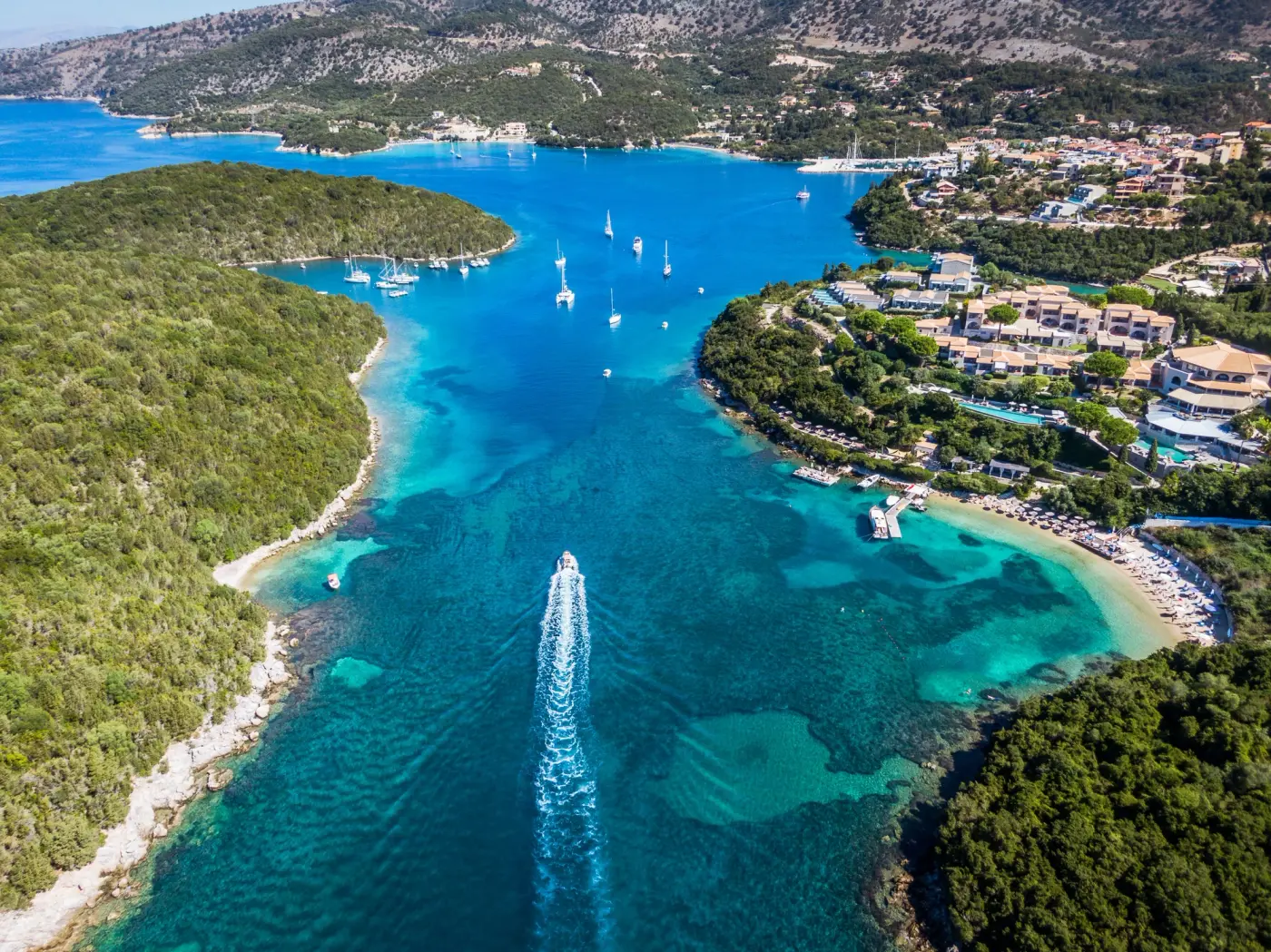
Most people imagine that chartering a yacht in Greece is complicated. It isn't, but the decisions have an order, and getting that order right is the difference between a week you remember for the rest of your life and a logistical scramble. After many seasons placing clients on Greek waters, I can tell you the process is the same whether you are booking a thirty-metre motor yacht for a family of eight or a sailing catamaran for two couples: eight steps, in sequence, most of which a broker carries for you.
This is the complete map. Each step links to the deeper guide if you want the detail; read straight through and you will know exactly how a Greek charter comes together, what it costs, and when to start.
The eight steps, in short
- Decide who is coming, and when.
- Choose crewed or bareboat.
- Choose your cruising ground.
- Shortlist the actual yachts, ideally through a broker.
- Understand the money: charter fee, APA, VAT, gratuity.
- Sign the contract and place the deposit.
- Plan the itinerary and the preference sheet.
- Board.
The rest of this guide takes each one in turn.
Step 1: Decide who is coming, and when
Two numbers shape everything that follows: how many guests, and which weeks. Guest count sets the size of yacht you need and, in Greek waters, whether you meet the twelve-guest rule. Almost every charter yacht in Greece is licensed for a maximum of twelve guests overnight, a limit set by international convention rather than by the yacht's size. Groups of fourteen and above still charter in Greece every summer; it simply takes a different solution.
Dates matter just as much. Greece charters from late April to late October, and the character of your week changes sharply across that window (wind, heat, crowds and price all move with the calendar). If your dates are flexible, read the month-by-month guide before you commit; the right week is often one you hadn't considered.
Step 2: Choose crewed or bareboat
A bareboat charter means you are the captain: you sail the yacht yourself, with no crew aboard. It is the more affordable option and a genuine pleasure for qualified sailors, but Greece requires the skipper, and a second competent crew member, to hold recognised sailing qualifications, and it puts the navigation, the cooking and the daily logistics on you.
A crewed charter puts a professional captain, chef and host aboard. You make no decision you don't want to make; you wake where you chose, eat what the chef prepared, and the yacht simply appears at the next cove. For the clients I look after, this is not a luxury upgrade. It is the entire point of the holiday. Everything that follows assumes a crewed charter, though the early steps apply to both.
Step 3: Choose your cruising ground
Greece is not one destination but several, each with its own temperament:
- The Cyclades (Mykonos, Santorini and the quieter islands around them): iconic scenery and energy, best for confident guests who don't mind the summer Meltemi wind.
- The Ionian (Corfu, Paxos, Lefkada): green, calm and gentle, the easiest water in Greece and a favourite for families.
- The Saronic (Hydra, Spetses, Poros): minutes from Athens, ideal for shorter charters and arrival-day starts.
- The Dodecanese (Rhodes, Symi, Patmos): medieval harbours and a more remote, eastern feel.
- The Sporades (Skiathos, Skopelos, Alonissos): sheltered, forested and home to Europe's only Mediterranean marine national park.
If you are weighing the two classic regions against each other, the Cyclades versus Ionian comparison lays out the trade-off in full. Your region also decides where you embark, which in turn shapes your flights.
Step 4: Shortlist the yachts (and why a broker)
This is the step where a good broker earns their place. The Greek market has hundreds of yachts; the listings all photograph beautifully, and almost none of them tell you what you actually need to know: how the yacht behaves in a blow, whether the crew is the reason guests rebook, which “twelve-guest” layout is genuinely comfortable for eight adults. A broker who has stood on the deck does.
Our role is to take your brief (party, dates, region, budget, the feel you're after) and come back with a short, honest list, not a catalogue. We tell you which yachts to rule out, and why. If you want to understand how the relationship works before you start, the first-timer's guide walks through it; the €50,000 mistake is the cautionary version of what happens when people skip this step. You can see a sample of our own fleet on the charter page.
Step 5: Understand the money
A crewed charter has a headline fee (the yacht and its crew for the week) and then three predictable additions. Knowing them up front is what separates a transparent quote from a nasty surprise.
- APA: the Advance Provisioning Allowance, typically 30-35% of the charter fee, paid up front and held by the captain to cover fuel, food, drinks, berthing and incidentals. Whatever is unspent is returned to you at the end.
- VAT: Greek charter VAT is 12% on charters that begin in Greek waters, the lowest headline rate in the Western Mediterranean.
- Gratuity: the crew gratuity is customary at 10 to 15% of the base charter fee, entirely at your discretion, given at the end of the week.
There is also TEPAI, the Greek cruising tax, which on a crewed charter the operator handles for you. The TEPAI guide explains it. For real, current numbers across yacht types and regions, our complete cost breakdown and the Greek Charter Index give you figures rather than vague ranges.
Step 6: The contract and the deposit
Greek crewed charters are written on the MYBA contract, the international industry standard (the same document used from Monaco to the Caribbean). It protects both sides: it fixes the yacht, the dates, the area, the inventory and the cancellation terms in writing. The full breakdown of MYBA terms is worth reading before you sign anything.
The standard payment schedule is half on signing and the balance around thirty days before you board, with the APA settled just before embarkation. The yacht's own insurance covers the vessel and crew; your broker will tell you exactly what it does and does not cover, and where your own travel insurance should fill the gap. A reputable broker will only ever place you on a commercially licensed, properly insured yacht. If anyone offers you a “private” yacht for charter, walk away.
Step 7: Plan the itinerary and the preference sheet
Once the yacht is booked, the week becomes yours to design. You complete a preference sheet (dietary needs, the wines you like, allergies, celebrations, how active or how still you want the days to be) and the crew builds around it. This is where a crewed charter quietly outclasses every hotel: the captain, chef and host tailor the week to you specifically, not to an average guest.
You don't need a fixed plan; the best itineraries flex with the wind and your mood. But it helps to know the shape of the week in advance. The booking-to-boarding guide covers everything that happens between signing and stepping aboard.
Step 8: Boarding day
You board, usually in the late afternoon, to a glass of something cold and a crew who already know your name and your preferences. The captain walks you through the yacht and the plan; you sail or stay in harbour for the first night as you prefer. At the end of the week the captain presents the APA account (every euro spent, itemised) and returns the balance. That is the whole process, from first idea to the moment you wish you had booked two weeks.
How far ahead should you book?
Three to six months is comfortable for most charters. But the best yachts (the ones with the crew everyone asks for) are booked a full year ahead for the peak weeks of July and August, and the shoulder-season weeks of May and September go quickly too. If you have fixed dates, start early; if your dates are flexible, you have more room. Either way, the first move is the same: a conversation.
Charter through a broker who has been there
George Yachts is a boutique brokerage working exclusively in Greek waters, a member of the IYBA and, in 2026, the subject of a Forbes feature on the Mediterranean charter market. We don't run a booking platform; we place a small number of clients each season on yachts we know personally, and we carry every step above so that you carry none of it. You can read more about how we work, and review our credentials and client reviews.
When you are ready, tell us what you have in mind (party, dates, the feel you're after) and we will come back with a short, honest list of yachts that fit.
P.S. Once your week is booked, the next question is always the suitcase. I wrote the honest answer here: what to pack for a Greek yacht charter, and what to leave at home.


