
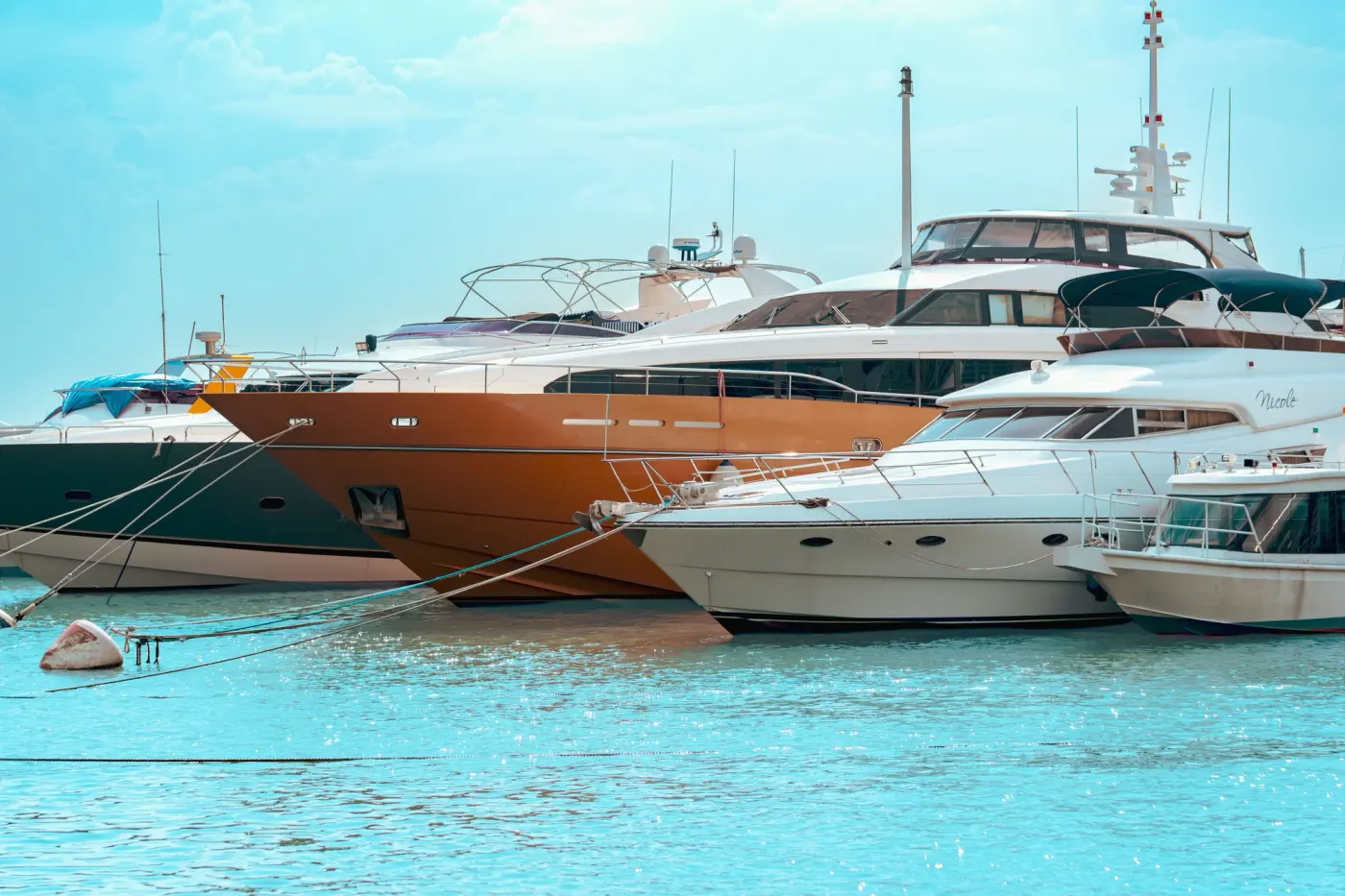
Ask what separates a superyacht from a large motor yacht and most brokers will quote you a length. The honest answer is not a number. Above 40 metres, what you are buying is separation: separate crew zones, separate guest zones, and enough deck volume that ten people can move around the yacht all day without ever crossing paths. That is the line between a week that feels like a very good hotel and a week that feels like your own private coastline.
This is a working broker's read of what the 40-metre-plus tier in Greece actually buys: the cost, the crew, the toys, the range, and the discretion that matters more than any of them. Every figure here is drawn from our own Greek Charter Index and the weeks we quote and book, not from a brochure.
What actually changes above 40 metres
Length is the headline; volume and range are the substance. A 38-metre yacht carries up to twelve guests and a full crew with room to spare, so the boat never feels staffed, only served. It also changes where you can go. Once a yacht sustains 18 knots, carries fuel for roughly 600 nautical miles without refuelling, and offers a stabilised foredeck for the longer legs, itineraries that feel grueling on a 22-metre become unhurried on a 38-metre. The sea state that ends a smaller yacht's day barely registers on this one.
At this tier the fleet divides into two characters: the classic displacement builders such as Benetti, Heesen and Feadship, which prize quiet and craftsmanship, and the modern performance yards such as Sanlorenzo, Custom Line and Mangusta, which trade a little serenity for speed and light. Neither is better. They are different weeks, and matching the right one to your guests is the first thing we do.
What a superyacht charter in Greece costs in 2026
A superyacht week in Greece starts around 150,000 euros as a net base charter fee, which lands near 245,000 all-in once provisioning, tax and gratuity are added. Most of the weeks we place sit between 280,000 and 500,000 euros net base. Above 50 metres, a single week passes one million euros. These are real 2026 numbers from our Index, not a range pulled from the air.
The base fee is the start, not the total. Budget the all-in like this:
- APA, the Advance Provisioning Allowance, at roughly 30% of the base on a motor superyacht, covering fuel, food, the cellar and dockage. How APA works and settles.
- Greek charter VAT at the yacht's certified rate: the statutory rate is 13% for a commercial crewed charter over 48 hours (24% for a short charter), and certified yachts at this size are often invoiced at 5.2% or 6.5%. at 13% for a commercial crewed charter over 48 hours, or 24% for a short charter under 48 hours.
- A gratuity of 10 to 15% of the base fee, customary and entirely at your discretion.
- Marina dockage at 1,500 to 5,000 euros per night in peak season, plus the TEPAI cruising tax charged by yacht length.
Take a 320,000 euro net base week as an example. Add APA near 96,000, Greek charter VAT of about 16,600 at a 5.2% certified rate (the statutory 13% ceiling would be 41,600), and a customary gratuity, and the all-in for the week lands close to 465,000 euros before any spending ashore. That is the figure we put in front of you on day one, not on the dock.
If you want the arithmetic across the whole market, our complete cost breakdown does it line by line. At the superyacht tier the proportions hold and the numbers are larger, and the one thing we will never do is quote you a base and let the all-in surprise you onboard.
What the week includes, and what it does not
The charter fee covers the yacht, her full crew, insurance and all standard equipment, the tenders and toys included. APA covers the running costs of your particular week: fuel, food and the cellar, berthing, and any special provisioning you ask for. What sits outside both is genuinely optional and entirely yours to choose: an exceptional wine list beyond the everyday, a specific berth in a marina that charges for the view, a high-speed overnight transit that burns more fuel than a gentle cruise. Nothing is hidden. Every euro above the base is a decision you make, and we cost each one before you commit to it.
The one rule no length changes: twelve guests
Here is the fact most brochures bury. The legal cap for any commercial charter yacht in Greek waters is twelve guests, whether the yacht is 30 metres or 60. A 50-metre superyacht typically sleeps those twelve in six cabins, one master, one VIP, and four doubles or twins, with ten to twelve crew berthed separately. This is regulation, not a sales position, and any broker who implies otherwise is one to leave. What length buys you above 40 metres is not more guests. It is more space, more crew, and more range for the same twelve people.
At this tier, the crew is the product
Two yachts from good yards will give you a comparable hull, a comparable jacuzzi, a comparable flybridge. What you are actually chartering is the crew. On the yachts we represent at this level, the chef has trained in Michelin-starred kitchens and provisions from the morning market rather than the supermarket. The chief stewardess runs the week the way a private hotel runs a turnover, invisibly. The captain has read these waters through at least a decade of Mediterranean charter seasons and knows which anchorage stays calm when the Meltemi turns. Hardware is bought. A crew like that is assembled, and keeping the best of them booked is most of what a broker quietly does.
Tenders, toys, and the helicopter question
Above 40 metres the toy kit stops being a list of extras and becomes a second vessel of its own: multiple tenders, often including a limousine tender for dinner ashore, alongside the full complement of seabobs, e-foils, diving kit and inflatables. The most common question at this tier is the helicopter. Many superyachts above 40 metres carry a touch-and-go pad rated for a single approach to drop or collect guests; permanent helicopter operation needs a certified helideck and hangar, and we represent two such vessels for 2026. For most guests a helicopter transfer from Athens or Mykonos to meet the yacht is simpler and far cheaper, and we arrange it as a matter of course.
Where a superyacht goes that a smaller yacht cannot
Range is the quiet luxury of this tier. A 40-metre-plus yacht turns the parts of Greece that are awkward for the smaller fleet into comfortable cruising: the northern Sporades and the Alonissos marine park, the eastern Dodecanese toward Patmos and Symi, even the wild south coast of Crete. Milos has become a superyacht favourite for exactly this reason, its sea caves at Kleftiko and the lunar coast at Sarakiniko reward a yacht that can reach them and a tender that can nose inside. A regulatory shift helps too: Greece's e-Charter Permission now allows non-EU-flagged yachts over 35 metres to charter in Greek waters for up to 28 days a year, which has widened the pool of large yachts available each season.
When to size up, and when not to
Not every charter needs 40 metres. A 35 to 49-metre motor yacht in Greece runs roughly 100,000 to 350,000 euros net base per week on our Index, and for a Cyclades week with eight guests it is often the complete answer: fast enough, properly crewed, and carrying every toy most parties will actually use. You size up past 40 metres for three specific reasons. The first is separation, when the guest list mixes generations or two families and the yacht has to absorb them without anyone feeling on top of anyone else. The second is range, when the itinerary reaches for the eastern Dodecanese, the Sporades or Crete. The third is the standard of crew and galley that only the larger boats sustain across a full week. If none of those three apply, we will tell you to keep your money and take the smaller yacht. That advice is the relationship.
Booking the top of the fleet
The best 40-metre-plus yachts for a peak July or August week are often confirmed a year or more ahead. The implication is simple: at this tier the yacht is chosen before the dates are fixed, not after. This is where a broker earns the engagement, by holding real relationships with the central agencies, inspecting the yacht and her crew in person, and planning the contingency you hope never to use. If you are weighing how to choose between brokers, we wrote the honest version of that here, and our credentials are on the table.
When you are ready, our superyacht charter page is the place to begin, or browse the wider fleet to see where the tier sits. Tell us the guests, the dates, and the feeling you are after. We will tell you, honestly, what the 40-metre tier will and will not do for it.
P.S. If the 40 metre tier is a step beyond this year's plan, the tier immediately below it is the busiest part of our book. What a €50,000 week buys in Greece covers the €45,000 to €90,000 band with the same honesty, including when to spend less.


